
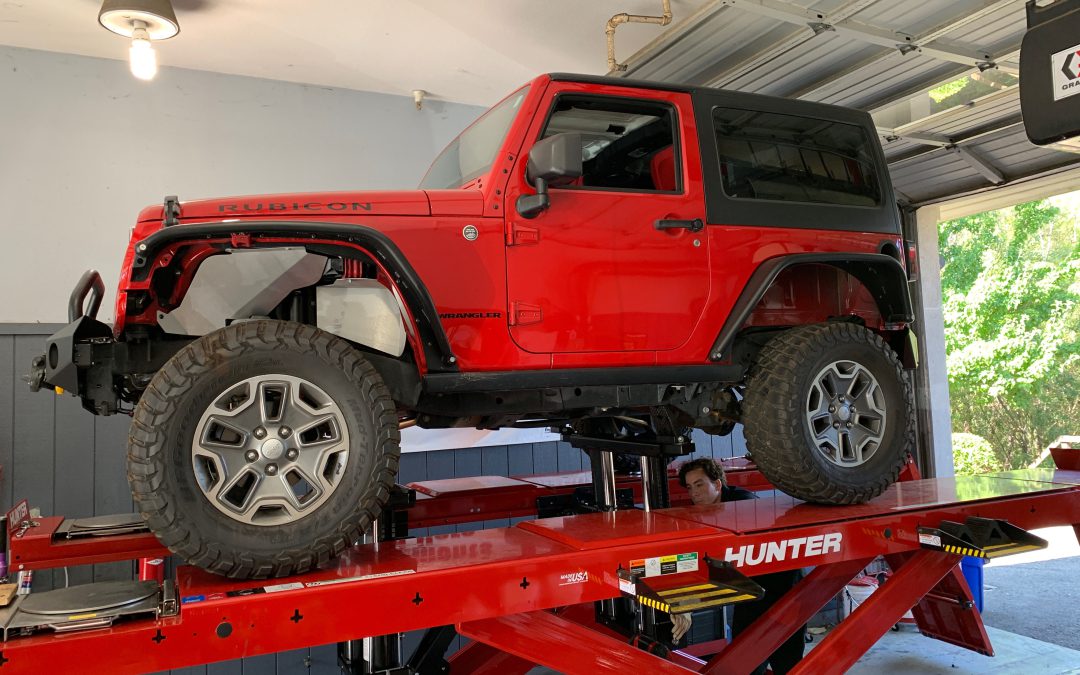
The best gear ratio for off-road driving gives high torque at low speeds, with common choices ranging from 4.10 to 4.88. Lower gear ratios assist vehicles in climbing steep slopes, traversing mud or sand, and navigating rocky terrain without stalling the engine. Gear ratio refers to how many times the driveshaft turns per wheel revolution, so higher numbers mean more power and less speed. Off-roaders select ratios depending on tire size and engine power, as large tires or lower engine torque require higher ratios for equal pull. To demonstrate how gear ratios function for actual off-roading and factors to consider before modifying them, the following sections deconstruct the core concepts and provide practical advice.
Key Takeaways
- Selecting the optimal gear ratio for off-road driving requires a thorough analysis of tire size, engine specifications, terrain type, and vehicle weight to achieve balanced performance and efficiency.
- Bigger tires and heavier vehicles require lower ratios to keep the torque up in situations like climbing steep grades or crawling over obstacles.
- Matching the gear ratio to your engine’s power curve and type is important for smooth power delivery and to avoid excess strain on drivetrain components.
- Tuning gear ratios for your driving style and common off-road environments boosts performance and driving comfort no matter where you drive.
- Dually transmission, transfer case, and axle ratios combine to deliver the absolute greatest crawl capability, towing strength, and durability for an extremely wide variety of off-road operating conditions.
- Bad or mismatched gear ratio selections can result in excessive wear and tear, diminished gas mileage, and even a loss in the vehicle’s resale value. It’s important to make a smart decision.
Finding Your Ideal Gear Ratio
Selecting the optimal gear ratio for off-roading is about finding the right fit for your vehicle, terrain, and objectives. Each setup is unique, which means the perfect ratio is a combination of tire size, type of engine, terrain, driving style, and your bike’s weight. Balance torque, speed, and efficiency for your type of off-road use.
Tire Size
Big tires effectively alter your gear ratio by traveling farther per revolution. This may reduce the torque at the wheels, causing it to struggle to ascend or crawl on top of obstacles. When you throw on bigger tires, you might find yourself needing to reduce your gear ratio to compensate for lost torque and maintain powerful acceleration. If you want to figure out the right ratio, use the formula: 0.003 multiplied by rpm multiplied by tire diameter in inches divided by differential ratio multiplied by transmission ratio. This will assist you in matching your speed on each gear to the new tire size. Larger tires can harm fuel economy and reduce acceleration, so altering the gear ratio is essential for maintaining even performance.
Engine Type
High horsepower, wide torque curve engines provide you with more leeway on gearing. If you’ve got a low-revving diesel or a small petrol engine, you might require a lower gear ratio to get sufficient torque at low speeds for off-road use. Engine mods, such as a new camshaft or turbo, can alter your torque curve and could require reconsidering your gear selection. Pairing the gear ratio with your engine’s strengths ensures the power comes when you need it most, like on those steep climbs or technical trails.
Terrain Focus
About: Discovering your optimal gear ratio. Rocky, technical trails favor low ratios, providing improved crawling prowess and control. Sandy or muddy terrain might require a compromise between wheel speed and torque. Use a lower ratio when you’re facing steep hills and need to keep moving without stalling. If you drive mixed terrain, find a compromise that allows you to crawl slowly but get moving faster when necessary.
Driving Style
The aggressive drivers who like quick bursts of speed need ratios that let you accelerate fast. Those who like slow controlled off-road movement might want a lower ratio for smooth torque delivery. Throttle response ties back to gear selection, so trying something different according to your preference and habits can optimize performance.
Vehicle Weight
Heavier vehicles, particularly those burdened with gear, should opt for lower ratios for increased torque and low-speed maneuvering ability. The heavier the load, the higher the workload on your drivetrain. Tweak your ratio to account for additional cargo and unbalanced weight, both of which can throw off traction and power delivery on challenging terrain.
The Crawl Ratio Secret
Crawl ratio is the secret to how well a 4×4 can go slow and steady over rough terrain. It indicates how far your engine’s power gets extended to the wheels. This assists you in maintaining traction when you wish to climb rocks or work through loose sand. A solid crawl ratio provides real control under difficult terrain, so you don’t stall or spin your wheels. In off-road use, a crawl ratio near 50 to 1 is a strong pick for most drivers. It provides a nice combination of crawl ratio and strength. Some folks who run hard trails even look for ratios as high as 80 to 1 for more grip and less wheel spin.
To work out your crawl ratio, you use a simple formula: take your engine’s RPM, divide by your transmission’s lowest gear, then divide by your transfer case ratio, and last by your axle ratio. For example, with a 4:1 low gear in the transfer case, a 4.56:1 axle, and a first gear ratio of 4:1, your crawl ratio is 4 times 4 times 4.56, which lands at about 73:1. This means your engine’s power gets geared down a lot before it strikes the wheels. If you add bigger tires, like 37s instead of stock, you’ll notice your crawl speed increase a little from 182.9 fpm to 193.2 fpm due to the tire’s larger rolling circle, so you cover a bit more ground with each rotation.
A lower crawl ratio assists most when you’re tackling steep hills or attempting to get over large rocks. If your crawl ratio is too low, such as 30 to 1, your truck may move too quickly and your transmission can heat up. That’s not good for slow rock work. A ratio in the 30 to 1 to 40 to 1 range is fine if you have lots of power and need to spin large tires, like 40-inch ones, over mud or sand. Some cambered setups, like mine with a 3.8 atlas transfer case, 4.88 gears and 6.0L engine, can still achieve crawl speeds up to 36 mph if you want to go fast on the flats.
It’s always a see-saw. The higher the crawl ratio, the more torque at the wheels. You sacrifice top speed. If you lock your axle, the torque goes to both wheels, not divided. This assists when both tires require traction simultaneously. With high torque, your driveline and axles have to be robust enough to tolerate the strain.
Power Versus Economy
The optimum gear ratio for off-road driving is never constant. It’s more about balancing power versus economy. The correct ratio is dependent upon what you drive, how you drive, and where you drive. A low gear ratio, like 4.56 to 1, means more engine turns for one wheel turn. This provides more torque at low speeds, which is crucial for rugged trails or ascents. More torque helps get over rocks or mired in mud but destroys fuel per kilometer. A high gear ratio, like 3.21 to 1, means fewer engine turns per wheel rotation. This conserves fuel on flatter roads but may not provide sufficient power for rough terrain.
The table below shows how changing gear ratios affects fuel use:
|
Gear Ratio |
Typical Use |
Fuel Use (L/100 km) |
Power Output (torque) |
|
3.21:1 |
Highway, light trails |
8–10 |
Low |
| 3.73:1 | Mixed, moderate off-road | 11 to 14 | Medium |
| 4.10:1 | Heavy off-road, towing | 15 to 18 | High |
| 4.56:1 | Extreme off-road | 18+ | Super High |
Lower gear ratios cause the engine to spin faster at a given speed. This keeps the engine in its power band, which is good for climbing hills or towing a load. Purring in high revs for extended hours may prematurely wear out engine parts. More heat and stress translates to more oil changes, belt checks, and sometimes costlier repairs. Those higher ratios keep RPMs on the low side, which benefits engine life and daily driving fuel economy. For those of us who use our cars hard for work and play, gear selection is a balancing act.
Certain drivers choose gear ratios by torque and horsepower. This can involve thoughtful strategizing and a bit of experimentation. Having a gearbox with more gears helps, as it provides more options for varying load or road conditions. You don’t have to use them all. The guys who race off-road are constantly adjusting gear ratios for optimal lap times. That’s how much ratio can affect performance.
Beyond The Ring And Pinion
Gear ratios are just one piece of the off-road performance puzzle. It’s not just the ring and pinion; other components, like the transmission, transfer case, and axles, affect how a 4×4 navigates and handles rocky terrain. Each one directly dictates how much power hits the ground, how much control you have, and how well your vehicle handles certain tasks, especially after changing things like tire size. These components all function in tandem, and understanding how they connect can assist you in selecting the ideal configuration for your requirements.
Transmission
- The gear teeth in a transmission define how much the engine’s power is transformed before it’s transmitted to the wheels. Transmission gear ratios dictate how the vehicle will start, climb, and cruise.
- Automatics usually have more gears and more seamless shifts, allowing the engine to remain at its peak power. Manual transmissions provide more control but require skill to select the appropriate gear, particularly after trading for larger tires or lower axle ratios.
- When tire size increases, the final drive ratio shift due to transmission gears becomes more obvious. You have a short 1st gear in your transmission, blended with a deep axle ratio, which can supplement the lost torque from adding larger tires.
- By selecting optimal gear ratios, both in the transmission and axles, shifting can be smoothed out and made more appropriate for slow, careful off-road work or steady highway speed.
Transfer Case
The transfer case provides a further level of reduction gearing, primarily in its low-range option. It allows a 4×4 to crawl slowly over rocks and hard dirt by increasing torque at the wheels. Some transfer cases feature lower low-range ratios that enhance the crawl ratio, which is an off-road work essential. Choosing a robust transfer case is important, as that extra torque from deeper gears causes it more stress. Aftermarket alternatives with improved low-range gears can assist a lot, particularly if you frequently drive on really steep or loose terrain. The transfer case’s purpose is obvious when larger tires are installed, as it assists in recovering the torque lost from the smaller effective final drive ratio.
Axles
- Rear axle gear ratios have a significant impact on the amount of weight your 4×4 can haul or tow. A deeper ratio provides more torque, which is good for towing or carrying heavy loads but may not optimize highway fuel economy.
- Swapping for aftermarket axle gears is common after installing taller tires, as the stock ratio can’t provide enough power to the ground.
- Selecting axle ratios is a compromise. Deeper gears assist with town, off-road, or towing. Tall gears are more efficient for fuel consumption on the highway.
- Stronger axles are required when running lower gears and bigger tires because more torque means additional stress on these components.

Stock Versus Modified Setups
Stock gear ratios are a great baseline for off-road and racing setups, providing a nice compromise of handling, fuel consumption, and reliability. These stock setups are designed by car makers to accommodate a wide range of drivers and surfaces, but cannot provide optimal performance for those who want to push the limits or require additional grip and power for challenging tracks.
|
Feature |
Stock Setup |
Modified Setup |
|
Cost |
Included in base vehicle price |
Can exceed $1,000,000 USD |
|
Performance |
Balanced, general use |
Tuned for specific goals |
|
Reliability |
High, factory-tested |
Varies, risk of issues |
|
Warranty |
Covered by maker |
Often voided |
|
Fuel Efficiency |
Predictable, average |
Can be better or worse |
|
Suitability |
General roads, light off-road |
Race, tough trails, pro use |
|
Flexibility |
Limited, one-size-fits-all |
High, custom for driver/track |
Aftermarket upgrades allow you to customize gear ratios to your driving style, engine torque, and the tracks you race. For example, pro race cars use ultra-close-ratio gearboxes, which keep the engine in its power range for faster shifts and more speed. This sort of setup assists a car in keeping flat out of tight corners or when going for it on bumpy ground. Modified gearboxes can alter final drive as well as individual gear ratios, giving drivers the choice to select the optimal balance between quick lap times or improved grip, but it is not cheap. Top race teams spend huge sums, sometimes exceeding a million US dollars, just to design and produce these custom setups.
Tweaking gear ratios can carry danger. Car makers will often void the warranty if you swap out the stock gearbox or change the final drive. Modified setups can wear out faster if not tested well. The results can be rewarding. By selecting the appropriate ratio for each track, drivers can shave lap times and make the car feel more grounded and stable. For instance, direct drive or short overdrive gears are designed for maximum performance on race circuits, but are not ideal for everyday or mixed-purpose vehicles. Fuel consumption can vary—a fine-tuned modified setup can conserve fuel at certain velocities but consume more at others.
The Unspoken Consequences
Gear ratios aren’t merely statistical values. They define how a vehicle drives, sounds, and performs. To get the ratio wrong can mean more than just a slow experience or a rattling ride. It can trigger a domino effect of problems, some obvious and some latent, that impact everything from your enjoyment of day-to-day rides to the resale value of your car. These unintended consequences extend far beyond dirt paths and can affect drivers anywhere, regardless of terrain or weather.
Drivetrain Stress
A mismatched gear ratio taxes drivetrain components, including axles, transmission, and differentials. When gearing is too low or too high for the application, these components labor harder than they need to, which accelerates wear and tear. Off-road, where terrain is rugged and the burden is strong, this issue compounds quickly. Weird axle noise is usually indicative of the ratios being off, and that’s not typically a minor annoyance; it’s a warning. Stress from improper gearing accelerates the wear on these vital components, resulting in more frequent repairs and less time on the road or trail. Disregarding these signs can result in breakdowns, expensive repairs, or even accidents, particularly if routine maintenance is neglected.
Daily Driving
The gear ratio you choose doesn’t only count in the jungle; it determines all your rides. Ratios ideal for crawling up steep hills can make highway driving noisy and unpleasant. Low ratios increase power but waste fuel, damaging efficiency and increasing cost. For daily use, this trade-off becomes clear: more off-road ability often means less comfort and higher fuel bills on regular roads. In cities or long commutes, this can accumulate. Balance is crucial because being too heavy on one application can render the vehicle less effective for another. Taking into account when and how you drive most frequently aids you in selecting a ratio that accommodates both realities.
Conclusion
To choose the best gear ratio for off-road, begin with your requirements. Steep hills and rocky trails require a lower ratio. Mud and sand require higher torque. A higher ratio works fine for flat dirt and faster roads. Consider your tire size, engine power, and the trails you confront most. Those who tinker with their setups understand that each adjustment introduces new compromises. Stock gears will do, but modifications are usually to improve traction or speed. Keep an eye on wear and mileage with any new configuration. Off-roading is trial and error. Experiment, find what works, and swap victories or flops with fellow drivers. Share your stories or advice in the comments so we can all learn quicker.
Frequently Asked Questions
What is the best gear ratio for off-road driving?
The best gear ratio for off-road driving is usually between 4.10 to 1 and 5.38 to 1. This range provides more torque and control for rough terrain.
Why does the crawl ratio matter in off-roading?
The crawl ratio dictates how slowly and smoothly you can crawl over obstacles. A higher crawl ratio provides you more control for gnarly trails.
How does gear ratio affect fuel economy in off-road vehicles?
Lower gear ratios make your off-road power possible, but they waste gas going down the highway. Find a happy medium for both circumstances.
Should I change my gear ratio after adding larger tires?
Correct, bigger tires lower torque at the wheels. Re-gearing returns the lost power and keeps you off road.
Can I use stock gear ratios for off-road driving?
Stock gear ratios are fine for light off-roading. When you upgrade to advanced trails or bigger tires, you will want to upgrade to a lower ratio.
What are the risks of using the wrong gear ratio?
With the incorrect ratio, you can experience bad fuel economy, less power, and excessive wear on your vehicle’s drivetrain.
Do gear ratios affect both manual and automatic vehicles?
Yes, gear ratios affect both. The impacts on torque and speed are the same regardless of the type of transmission you have.
Boost Your Luxury Car’s Performance with Expert Upgrades at autoTECH Blackhawk.
Give your luxury vehicle the attention it deserves with specialized performance upgrades from autoTECH Blackhawk. Our technicians know how to elevate high-end cars with precision work that enhances power, handling, and overall driving comfort. Whether you want sharper acceleration, smoother control, or a refined suspension setup, we tailor every upgrade to match the unique demands of your luxury model.
At autoTECH Blackhawk, luxury performance means more than speed. It’s about craftsmanship, protection, and long-term reliability. Every upgrade is supported by our 3-year and 36,000-mile warranty on related repairs. We use only top-quality, manufacturer-approved parts to ensure your vehicle performs at its best. From advanced exhaust and intake systems to ECU calibration and suspension refinement, we deliver upgrades that feel seamless and sophisticated on the road.
Ready to raise the bar for your luxury car? Reach out to our team to schedule your performance upgrade consultation and see why drivers trust autoTECH Blackhawk for exceptional quality and elevated driving experiences.