
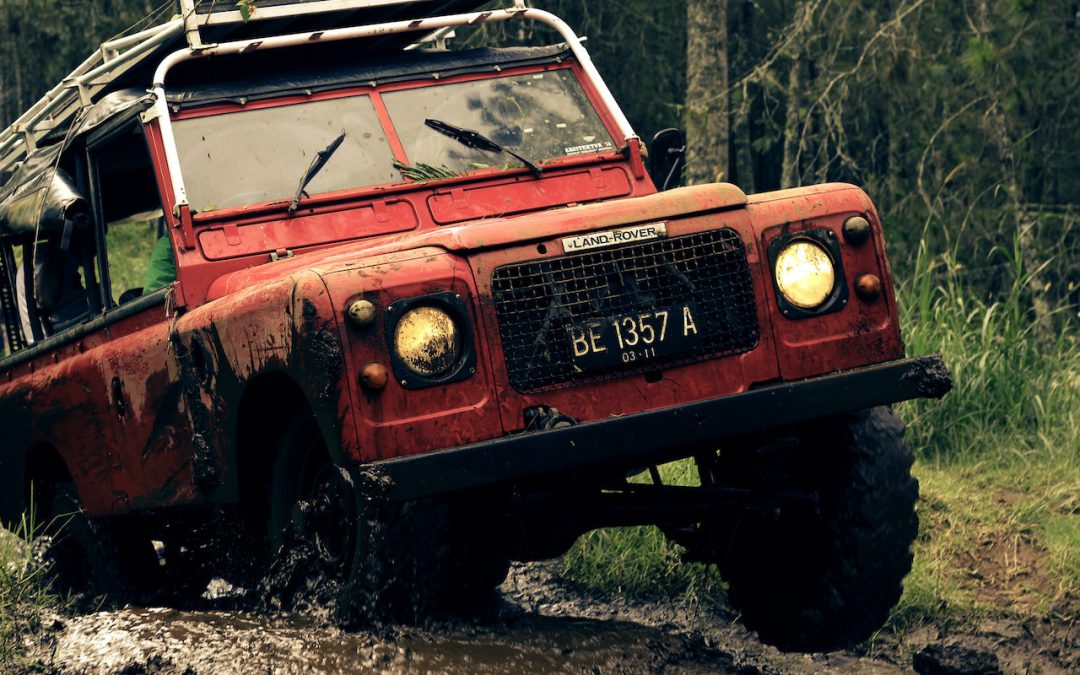
To build the ultimate off-road vehicle, key steps center on picking a strong base, picking the right tires, and making smart upgrades for ground clearance and traction. A sturdy frame, such as steel or reinforced aluminum, provides the foundation for rugged paths. Off-road tires with deep treads bite into mud, rocks, or sand. Upgrades like skid plates, lift kits, and locking differentials increase safety and skill on rocky terrain. Stout shocks and a sealed air intake guard key components from damage. Any change should be appropriate to the terrain and duration of your adventure. The following sections provide an up-close look at the components, instruments, and advice to assist in constructing a tailor-made off-road ride for multiple applications.
Key Takeaways
- By defining your off-road mission, you’ll make sure every design and engineering decision is cohesive with your terrain, driving style, and budget. This results in a more capable and dependable build.
- Choosing your vehicle components — chassis reinforcements, suspension, wheels, tires, and even braking upgrades depending on rock crawling versus desert running, overlanding, or mudbogging — should always be situationally specific to enhance safety and performance.
- Powertrain options, including engine tuning, gearing ratios, and drivetrain lockers, play a pivotal role in maximizing torque, maneuverability, and grip in demanding off-road terrains. They need to be meticulously configured and tested for compatibility.
- We integrated body armor and recovery gear, such as skid plates, bumpers, and essential self-recovery equipment to protect vital systems and prepare for hard conditions in remote areas.
- Modern off-road builds benefit from advanced electronics, ergonomic cockpit design, and robust navigation systems, which enhance driver safety, comfort, and route accuracy on extended journeys.
- Regular local inspections, documented modifications, and shakedown testing keep it street legal, reliably operational, and ever improving.
Define Your Mission
With your mission defined to shape every step, you construct an off-road vehicle. It’s a personal exercise that will frequently involve some soul-searching regarding your desires, ambitions, and the contexts you anticipate confronting. This mission provides your project intention, assists in steering your decisions, and imbues the build with significance. It’s fine to take some time and soul-searching to determine what you desire. You may even discover your targets shift as you gain experience throughout the project. Craft your mission statement to keep you motivated. Just by writing it out, this will help you see what counts. Think about the landscape, your style of riding, what you aspire to, and how much you’re willing to spend in terms of time and money.
Key focus areas for your mission:
- Rocky trails: sharp rocks, steep climbs, uneven ground
- Sandy dunes: deep sand, shifting surfaces, high-speed runs
- Mud pits: soft, wet ground, deep ruts, unpredictable traction
- Long-distance overlanding: remote routes, mixed terrain, self-sufficiency
Rock Crawler
Designing for rocky trails means selecting components that increase traction and allow your ride to flow over large boulders. High ground clearance is essential. You implement coil-over or multi-link suspension and allow each wheel to travel independently so your chassis remains planted. Opt for tires with strong sidewalls and aggressive tread designs; these assist in ascending and maintaining control on steep pitches. Robust axles can bear the stress of technical moves. The more resilient, the better. Upgrades such as locking differentials and reinforced housings assist you in conquering technical lines.
Desert Runner
Desert runners require lightweight frames, such as aluminum or rugged composites, to maintain low weight and high speed. Utilize long-travel shocks and tuned suspension to smooth out bumps at high speed. Choose all-terrain or sand-specific tires for traction on loose terrain. Concentrate on extracting more horsepower from your engine and tune it for torque and a rapid throttle response. These modifications allow you to maintain momentum while traversing sand dunes or hard-packed trails.
Overlander
As with most things, an overlander build is about balance. Begin with oversized cargo racks, modular drawers, and water storage for extended journeys. Throw in some ergonomic seats and good ventilation to make those long drives comfortable.
Overland essentials checklist:
- Winch: for self-recovery
- Recovery boards: for traction in sand or mud
- Hi-lift jack: for tire changes in rough spots
- Shovel and tool kit: for on-the-spot repairs
- Extra fuel and water: for long remote sections
A bigger fuel tank or jerry cans allows you to keep going far from towns.
Mud Bogger
Deep mud requires tall, wide tires with heavy tread. Lift kits make your Jeep taller so that you don’t get stuck or scrape the undercarriage. Waterproofing like sealed electrical connections and snorkels protects essential components. Consider locking differentials and low-range gearboxes to maintain traction on slick, wet terrain. A suitable drivetrain lets you punch through the deepest bogs.
The Core Build Process
When you’re building the ultimate off-road vehicle, you begin with a base that has rock solid reliability and off-road strength. Famous instances are the Toyota Land Cruiser, Jeep Wrangler, and Ford Ranger. The vehicle’s age and cost are less important than the vehicle’s capacity to carry upgrades and take a beating. Planning is more than just a parts list; it’s a detailed system-by-system roadmap that defines the function and sequence of each modification. This helps you prevent wasted dollars and bad results. A lot of successful builds divide the budget, roughly 30 percent for suspension and tires, 40 percent for protection, lighting, and add-ons, and the remainder for tuning and setup. Installation of components such as suspension, steering, or electronics frequently requires expert hands in order to maintain optimal safety and performance. It’s crucial to record each phase, highlighting what succeeds and what should be adjusted, which has the potential to render future modifications more accurate.
Chassis Reinforcement
Chassis upgrades often start with steel plating or boxed reinforcements at stress points such as suspension mounts and frame rails. Additional cross members increase stiffness and prevent the frame from twisting on rough terrain. For those who race them flat out, tube frames provide strength and flexibility at the expense of weight. Thoughtful reinforcement placement keeps your vehicle evenly weighted, as a bad weight spread wrecks handling and safety.
Suspension System
The suspension is the soul of off-road capability. Base-level lift kits cost between $1,200 and $2,200 and fit moderate trails and larger tires. Top-of-the-line long-travel setups cost between $3,800 and $6,500 and handle rock crawling and rip through the desert. Adjustable coilovers or air suspensions allow motorists to fine-tune ride height and firmness to accommodate varying payloads or terrain. High-quality shocks enhance comfort and maintain tire contact with the road. Geometry checks, such as proper caster and camber, ensure both a smooth drive and off-road traction.
Wheels and Tires
Strong, light alloy wheels are best for harsh trails. Steel wheels can bend. Tire selection is surface dependent. Mud-terrain or all-terrain treads are typical. Wheel offset and backspacing adjust how far wheels stick out, impacting both looks and off-road clearance for wider tires. Beadlock wheels, although expensive, lock tires to rims for low-pressure crawling. With the right equipment, installing wheels and tires is a DIY task, avoiding $100 to $300 per set.
Braking Upgrades
Modern off-road builds need powerful brakes. Larger rotors and multi-piston calipers provide increased stopping power, especially on heavier builds. Steel-braided brake lines are abrasion and swelling resistant. Certain builds incorporate anti-lock systems to prevent half slides on wet or loose terrain.
Steering Geometry
Steering is heavily used off-road. Upgrading to solid links, reinforced tie rods and heavy-duty knuckles makes steering more accurate and dependable. Altering the steering angle allows the machine to conquer more acute ascents and curves. A steering stabilizer smooths out the bumps and dampens kickback.

Power and Drivetrain
Constructing the ultimate off-road machine involves being deliberate about where the power comes from, how it’s controlled, and how it gets to the ground. As important as the tires you pick out is the right engine, transmission, and drivetrain setup. Every component has to come together to conquer rugged terrain, brutal ascents, and slippery surfaces. The information below describes how to optimize each component.
Engine Tuning
Cold air intakes draw in cooler air, which is denser and contains more oxygen. This allows the engine to burn fuel more efficiently, providing a slight yet consistent increase in power. A powerhouse performance exhaust system lets the engine breathe out easier, which can boost your horsepower and even alter your sound profile so you sound like a beast without being obnoxiously loud on a daily basis.
Engine management, such as programmable ECUs, optimizes fuel and ignition. You can compensate for altitude, fuel quality, or even toggle between power maps for street and offroad. Turbocharging is another alternative to increasing output. While it can provide a huge enhancement, even to smaller engines, it requires very careful tuning to ensure it doesn’t put undue stress on other components. Tuning should never be at the expense of reliability, particularly when remote off-roading.
Gearing Ratios
Depending on your gear ratios, you can influence torque, speed, and fuel consumption. Lower gearing, which has higher numerical ratios, provides you with more torque at the wheels, which is perfect for scaling and crawling over rocks. Higher gearing, which has lower ratios, allows for faster and more fuel-efficient on-road travel.
|
Gear Ratio |
Torque (Nm) |
Max Speed (km/h) |
Use Case |
|
4.56:1 |
High |
Low |
Rock crawling |
| 3.73 to 1 | Medium | Medium | Mixed driving conditions |
| 3.21 to 1 | Low | High | Highway travel |
Trialing different ratios with your tire size and your driving style is what really nails down the right balance. Lower ratios will help in mud or sand, and higher ratios are better for long highway drives.
Drivetrain Lockers
Front and rear axle lockers assist in maintaining equal tire rotation speeds. This is crucial in mud, rocks, or snow where a tire can lose traction. Lockers on both axles provide constant torque to all four tires even if one breaks traction. Selectable lockers mean you only engage when you need, which saves wear and operates for mixed road use. Automatic lockers are pavement-ready, but they can be brutal.
Durability counts, so shop for lockers made for hard wear. Some drivetrains can’t handle torque when one wheel is spinning free and that’s what lockers solve. Four-wheel drive, in particular part-time four-wheel drive, has multiple road modes: two-wheel drive for dry roads, four-wheel drive high for slippery roads, and four-wheel drive low for steep or rough terrain.
Armor and Recovery
All-terrain vehicles encounter punishing conditions that can destroy critical components and require on-the-spot recuperation. A little smart upgrade keeps the ride safe and prepared for rough trails, and the right equipment ensures you can free yourself without assistance. Below are the most important armor and recovery items to include for a well-protected build:
- Heavy-duty fenders and side panels
- Rock sliders
- Skid plates (steel or aluminum)
- Reinforced fuel tank
- Aftermarket bumpers with recovery points
- Winch with fairlead
- Hitch receiver as recovery anchor
- Portable air compressor
- High-lift jack
- Recovery boards
- Tow straps and shackles are essential for recovery, not pulling a stranded vehicle with a tow strap like a bunch of morons.
- Protective coatings for body panels
- Regular inspection of D-rings and hardware
Body Protection
Heavy-duty fenders and side panels are my first line of defense against flying rocks and brush, particularly on tight singletrack. These panels, constructed from thicker steel or hardy plastics, soak up impacts that would otherwise dent or rip the vehicle’s skin. Rock sliders sit below the doors and absorb blows from rocks, logs and ruts that might otherwise dent or disfigure the lower body. For those who drive on extreme terrain, a full cage provides additional protection to the passenger compartment and inhibits its collapse in case of a rollover.
Like a good fur coat, poly spray and other protective coatings help seal out rust and corrosion from water, salt, and mud. They provide a protective scratch resistant layer and simplify clean-up after a day of outdoor adventures.
Undercarriage Safety
Skid plates protect my oil pan, transmission, and transfer case from sharp rocks and debris. Steel plates provide better protection, while aluminum trims pounds while still protecting the vital areas. A reinforced fuel tank, frequently with additional shielding, protects fuel if the ATV bottoms out. Exhaust routing should steer clear of low-hanging pipes that can catch or be crushed in rough ground. After off-road trips, checking bolts, plates, and mounts for cracks or wear will catch issues before they become bigger problems.
Self-Recovery Gear
Tow straps, shackles, and a minimum of two recovery points up front are a must on every off-road build. Hitch receivers make great anchor points because they’re bolted to the frame. Related: D-rings and all hardware require frequent inspections to prevent snapping or rust. A winch with fairlead is essential for solo recovery, but always utilizes the proper extension strap, as winch straps have lower breaking strength than tow straps. Never use a tow strap as a recovery rope; this will kill people! A high-lift jack can assist with raising a mired wheel, while a portable air compressor allows you to deflate or inflate tires for optimal traction. Recovery boards provide tires with the traction required to break free from mud or sand, sparing you hours of digging.
Electronics and Ergonomics
If you think building the ultimate off road vehicle is about horsepower or beefy tires, then you don’t appreciate the role that electronics and ergonomics play in how a vehicle performs across difficult terrain. With smart electronics and ergonomics built in, fatigue is minimized, and drivers are efficient and safe. Essential features for a modern off-road build include:
- Select navigation systems with current off-road-specific mapping and GPS precision.
- Install user-friendly controls in the cockpit so drivers can reach and operate key functions quickly even while bouncing across rough terrain.
- Add a lot of charging ports for phones, tablets, and GPS units, an absolute requirement for those long trips into the wilderness.
- Be sure electronic housings are rated IP 9 for moisture protection. This protects key systems from dust, water jets, and submersion to three meters.
- Think future-proofing with head-up displays or 360-degree cameras for navigating tight, low-visibility situations.
Advanced Lighting
LEDs are pretty much standard fare for off-road builds these days. They generate two to three times more light than stock halogens, provide a color temperature that reduces eye strain on long night runs, and consume significantly less power. Light bars, in particular wide-beam models, disperse light over major expanses, which is essential for detecting obstructions in their earliest stages. Fog lights provide a concentrated low beam that cuts through rain or dust, making challenging weather conditions less dangerous. Mounting options count. Roof and A-pillar mounts offer height and broad coverage, but ensure housings are rugged, preferably DIN rail mounted, and waterproof and impact rated.
Navigation Systems
Off-road navigation with GPS units is for trails, not highways. Off-road-specific devices tend to come with offline mapping, which is essential in no-signal areas. Certain cutting edge mobile applications provide real time trail condition updates, preventing you from running into danger. Rugged mounting, bolted or clamped to survive a jolt, lets devices stay in sight and secure. For long trips, always have a backup, such as paper maps or a second device.
Driver Cockpit
A well-designed cockpit improves both comfort and performance. Ergonomic seating supports the body against shocks and bumps, reducing fatigue over hours of rough travel. Controls must be close and easy to use, with big buttons or dials that work even with gloves. Sound insulation, sometimes overlooked, can make a big difference on long trips by cutting engine and road noise. Future concepts like 360-degree camera systems or heads-up displays are promising, but even now, a smart layout and good materials matter.
Legal and Shakedown
Every off-road build has to begin with a good legal line of sight and a diligent respect for safety and reliability. Making the ultimate off-road machine isn’t just about putting on bigger tires or a lift. It calls for a serious examination of compliance, documentation, and real-world experiments. These are important steps regardless of your location.
Road Compliance
Checking your area’s #1. Certain countries impose strict regulations on modified vehicles such as caps on wheel size, lighting location, and emissions. Areas such as the European Union request a paper trail of all significant modifications, while others merely require an audit. Off-road activity permits might be required, particularly for protected zones or national parks. Insurance isn’t just for the street; many insurers have special policies for off-roaders, protecting you from damage or theft during use. Laws change fast. Going through official channels, like government sites or local clubs, keeps you current.
|
Requirement |
Example Region |
Documentation Needed |
Typical Testing Outcome |
|
Emissions Compliance |
EU |
Inspection report |
Pass/Fail |
|
Lighting Modification |
Australia |
Modification log |
Pass if within limits |
|
Suspension Lift |
USA |
Engineering certificate |
Pass after approval |
|
Tire Size |
Various |
Photographic proof |
Pass if under max diameter |
Initial Testing
All the while, testing the built- in controlled settings is crucial. Begin with easy ground, then advance to stones, sand, and swamp. Track core metrics: traction loss, suspension rebound, and steering response. Utilize tire pressure gauges, GPS speed logs, and onboard diagnostics to collect real data. If it bottoms out or loses its grip, tune the shock settings or tire pressure. A brief test log with notes and pictures makes it easier to spot trends and avoid mistakes the next time.
Recording the test outcomes is not only for documentation but for evidence in case of a legal shakedown and for optimizations down the road. Simply put, engineers have long used test logs to satisfy legal or warranty requirements.
Fine-Tuning
Last feedback from testing guides what to fix next. If it rides too stiff, soften the suspension. If electronics stutter, inspect wiring or upgrade connectors. Every tweak should play with the rest of the build. Switching springs might require a new sway bar. A long-term plan helps: list upgrades by priority, balancing cost and gains. Performance goals shift as you drive more, so keep notes and review after each outing.
Conclusion
To build the ultimate off-road ride, know your goal, choose robust starting components, and keep it simple. Put a strong frame and the right power to handle steep ascents or heavy bog. Put on solid armor, good winches, and lights that punch through any fog. Configure obvious switches, employ low tech, and note the regulations for your locality. Take your build on actual trails to identify vulnerabilities. Every tweak makes your ride more awesome for the untamed. Test new equipment, exchange with buddies, and continue exploring. Off-road fans become more numerous with each outing. Have a tip, query, or crazy tale? Leave it in the comments or contact me—I’m always down to trade thoughts and assist.
Frequently Asked Questions
What is the first step in building an off-road vehicle?
It’s yours. Define your mission. Figure out where and for what you’re going to use it. This steers every choice, from parts selection to mods.
Which drivetrain is best for off-road use?
4WD or AWD offers better traction and control on rough terrain. Select based on your terrain and driving style.
Why is underbody armor important?
Underbody armor shields critical components such as the engine, transmission, and fuel tank from rocks and debris. It reduces the risk of expensive off-road damage.
What recovery gear should I include?
Add a winch, recovery straps, and shackles. These tools assist in freeing your rig if it gets stuck and add much-needed safety to challenging recoveries.
How can I improve off-road lighting?
Arm it with LED light bars and spotlights. Good lighting not only helps you spot obstacles at night and in bad weather, but it makes off-roading safer.
Are there legal rules for off-road vehicle modifications?
Yes. Know your local and national laws. A few of these upgrades might not be street legal everywhere. Please, always check your regulations before modifying.
Why is a shakedown run necessary?
A shakedown run puts your rig to the test out there in the wild. It helps you find trouble early, making sure you’re ready and safe before going on longer adventures.
Boost Your Luxury Car’s Performance with Expert Upgrades at autoTECH Blackhawk.
Give your luxury vehicle the attention it deserves with specialized performance upgrades from autoTECH Blackhawk. Our technicians know how to elevate high-end cars with precision work that enhances power, handling, and overall driving comfort. Whether you want sharper acceleration, smoother control, or a refined suspension setup, we tailor every upgrade to match the unique demands of your luxury model.
At autoTECH Blackhawk, luxury performance means more than speed. It’s about craftsmanship, protection, and long-term reliability. Every upgrade is supported by our 3-year and 36,000-mile warranty on related repairs. We use only top-quality, manufacturer-approved parts to ensure your vehicle performs at its best. From advanced exhaust and intake systems to ECU calibration and suspension refinement, we deliver upgrades that feel seamless and sophisticated on the road.
Ready to raise the bar for your luxury car? Reach out to our team to schedule your performance upgrade consultation and see why drivers trust autoTECH Blackhawk for exceptional quality and elevated driving experiences.