Winter can expose weaknesses in a vehicle that may be easy to overlook during mild weather. A battery that starts the engine without trouble in autumn may struggle after the temperature drops. Tires that feel acceptable on dry pavement may provide inadequate traction on snow or ice. Worn wiper blades, weak antifreeze, low tire pressure, and a nearly empty fuel tank can turn an ordinary trip into a stressful—and potentially dangerous—experience.
Preparing your car for winter conditions is therefore about more than completing a seasonal maintenance checklist. It is about improving reliability, visibility, traction, comfort, and safety before cold weather creates an urgent problem. A careful inspection can help you identify worn parts, correct low fluid levels, assemble appropriate emergency supplies, and decide whether your vehicle needs professional service.
The exact preparations depend on where you live and how you drive. A motorist who faces occasional frost has different needs from someone who regularly travels through heavy snow, mountain passes, or isolated rural areas. However, every driver can benefit from checking the major systems that cold temperatures and winter precipitation affect.
This guide explains how to prepare your car for winter conditions, what you can inspect at home, when to involve a qualified technician, and how to build habits that make winter travel safer.
Key Takeaways
- Inspect your vehicle before consistently cold weather arrives so there is time to complete repairs.
- Check the battery, charging system, tires, brakes, cooling system, fluids, lights, wipers, and heating and defrosting systems.
- Use tires appropriate for the temperatures and road conditions you expect, and check their pressure regularly.
- Confirm that the coolant provides suitable freeze protection rather than relying on appearance alone.
- Replace worn wiper blades and use windshield-washer fluid formulated for freezing temperatures.
- Keep snow, ice, lights, cameras, sensors, windows, and mirrors clear before driving.
- Carry an emergency kit suited to your route, weather, passengers, and the possibility of a long delay.
- Reduce speed, increase following distance, and make steering, braking, and acceleration inputs smoothly.
- Follow the vehicle manufacturer’s maintenance requirements and seek professional help when an inspection reveals a problem.
Why Is Winter Vehicle Preparation So Important?
Cold temperatures affect many parts of a vehicle at the same time. Engine oil becomes more resistant to flow during a cold start. Battery performance falls as the chemical processes inside the battery slow. Rubber components can stiffen, tire pressure decreases, and moisture can freeze on glass, door seals, locks, and road surfaces.
Winter also increases the demands placed on the vehicle. Headlights may be used more often because the days are shorter. The blower, rear defroster, heated seats, and other electrical accessories add load to the charging system. Tires must manage wet pavement, slush, packed snow, and sometimes ice. The cooling system must protect the engine from both overheating and freezing.
Preparing in advance gives you a chance to address these overlapping demands. It can also reduce the likelihood of being stranded in conditions where waiting for assistance is uncomfortable or unsafe.
Cold Weather Can Reveal Existing Problems
Winter does not always cause a vehicle problem; it often reveals one that was already developing. A marginal battery, slow starter, corroded cable connection, weak alternator, small coolant leak, or worn tire may appear functional in moderate weather. A severe temperature drop can push that component beyond its remaining capacity.
Warning signs such as slow cranking, dim lights, fluid spots, frequent tire-pressure warnings, squealing belts, unusual brake behavior, or inconsistent cabin heat should be investigated before winter travel.
Winter Roads Reduce the Margin for Error
On dry pavement, a small delay in braking or a slightly abrupt steering movement may not cause a problem. On snow or ice, the same action can overwhelm the available traction. Good tires, effective brakes, clear visibility, and a properly functioning stability-control system help, but they do not eliminate the need for cautious driving.
When Should You Prepare Your Car for Winter?
Begin preparing before freezing conditions become routine. Early fall is often a practical time because repair shops may be less crowded, winter tires may be easier to obtain, and you will have time to correct problems discovered during the inspection.
Do not wait for the first major storm if your area commonly experiences early frost or sudden temperature changes. If you plan to travel into colder regions, prepare according to the conditions at your destination and along the route—not just the weather at home.
Review the Maintenance History First
Before inspecting the vehicle, review its owner’s manual and service records. Determine when the battery, coolant, brake fluid, oil, filters, spark plugs, belts, hoses, brakes, and tires were last inspected or replaced. The manufacturer’s schedule should guide decisions about fluid type, viscosity, service intervals, and replacement procedures.
An overdue maintenance item is more likely to become inconvenient when the vehicle is exposed to cold starts and difficult road conditions.
How Should You Check the Battery and Charging System?
The battery is one of the most important parts of a winter inspection. Cold weather reduces a battery’s available output while the engine may require more effort to crank. This combination can cause a weak battery to fail with little warning.
Look for Signs of Battery Trouble
Pay attention to slow engine cranking, clicking when you attempt to start, flickering lights, electrical accessories that operate unusually slowly, or a battery or charging-system warning light. These symptoms do not always identify the battery as the cause; the starter, alternator, wiring, or connections may also be involved.
Inspect accessible terminals for looseness, corrosion, damage, or moisture. Do not touch leaking material, and do not work around a damaged or swollen battery. Battery systems can produce explosive gas and corrosive substances, so follow the manufacturer’s safety instructions.
Have the Battery Tested
A professional battery and charging-system test can provide more useful information than voltage alone. It can assess the battery’s ability to deliver current and help determine whether the alternator is charging properly.
Battery life varies with climate, vehicle design, use pattern, and maintenance. Age is a useful context, but testing and actual conditions are more informative than following a single universal replacement age.
Know How Your Vehicle Changes the Procedure
Some modern vehicles require battery registration or electronic system resets after replacement. Hybrids and electric vehicles contain high-voltage components that should not be treated like a conventional 12-volt system. Even these vehicles typically rely on a low-voltage battery for control systems and startup functions.
Consult the owner’s manual or a qualified technician before disconnecting or replacing a battery, particularly when the vehicle uses advanced electronics or high-voltage propulsion.
What Should You Check About Tires Before Winter?
Tires are the vehicle’s connection to the road, making their condition central to winter safety. Inspect all four road tires and the spare, if the vehicle carries one.
Measure Tread and Inspect for Damage
Look for uneven wear, embedded objects, cuts, cracks, bulges, exposed cords, and other damage. Uneven wear can indicate alignment, suspension, or inflation problems. A tire with structural damage requires prompt professional attention.
Legal minimum tread standards are not necessarily a target for winter performance. Tires generally lose their ability to clear water and grip loose snow as tread becomes shallow. If you regularly drive in snow, consult a tire professional about whether the remaining tread is appropriate for expected conditions.
Consider Winter Tires
All-season tires may be adequate for moderate climates and occasional light winter conditions, but dedicated winter tires are designed to remain more flexible in cold temperatures and provide improved traction on snow and ice. They can be valuable even when roads are cold and dry.
Install winter tires as a complete matched set unless the vehicle or tire manufacturer specifically directs otherwise. Mixing tires with significantly different designs or traction capabilities can create unpredictable handling. Select the correct size, load rating, and speed rating for the vehicle.
Studded tires and tire chains are regulated differently by location. Verify local rules and the vehicle manufacturer’s guidance before using them. Practice installing chains in a dry, safe location rather than learning beside a snowy road.
Check Tire Pressure Frequently
Air pressure typically falls as ambient temperature decreases. Check pressure when the tires are cold and inflate them to the specification on the vehicle’s tire-information label or in the owner’s manual. Do not use the maximum pressure molded into the tire’s sidewall as the normal target unless the vehicle manufacturer specifically calls for it.
Recheck pressure after substantial temperature changes and before long trips. A tire-pressure monitoring system is helpful, but it does not replace routine manual checks.
Inspect the Spare and Repair Equipment
If the vehicle has a spare tire, verify its pressure and condition. Make sure the jack, lug wrench, wheel-lock key, inflator, sealant, or other supplied equipment is present and usable. Check the expiration date on tire sealant where applicable.
Remember that changing a tire beside an icy or low-visibility road can be dangerous. If the location is unsafe, remain protected and request roadside assistance rather than attempting a repair.
Should You Inspect the Brakes and Suspension?
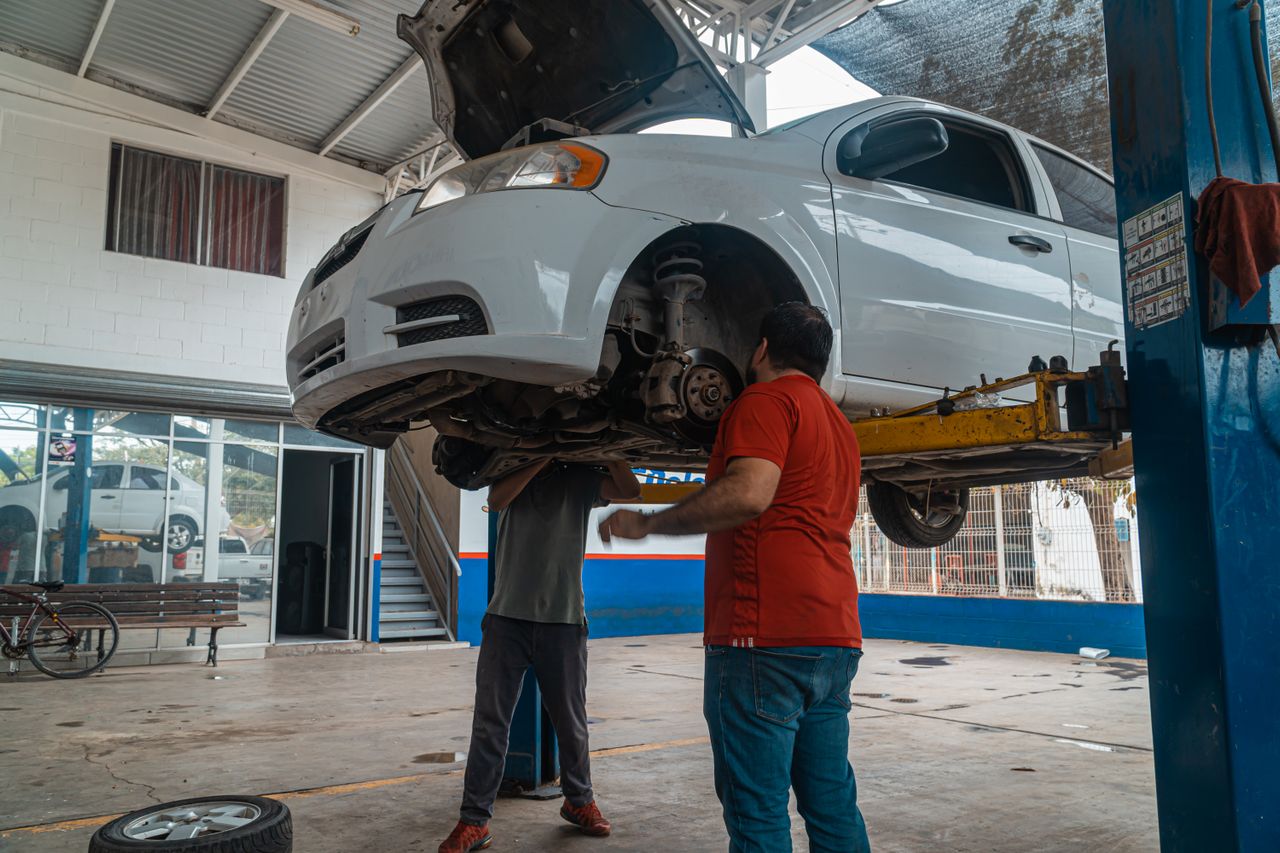
Winter traction is limited, but the braking and suspension systems must still respond consistently. Have the brakes inspected if you notice grinding, squealing, vibration, pulling, a soft pedal, increased stopping distance, or warning lights.
A comprehensive inspection may include pad or shoe thickness, rotors or drums, calipers, hoses, lines, parking-brake operation, and brake-fluid condition. Problems involving the antilock braking system or electronic stability control can reduce important safety functions.
Worn shocks, struts, bushings, ball joints, or steering components can make the vehicle harder to control on uneven or slippery roads. Address clunks, looseness, wandering, excessive bouncing, or irregular tire wear before winter trips.
What Other Mechanical and Exterior Items Should You Inspect?
Winter preparation should include several components that are easy to overlook.
Exhaust System
Have the exhaust inspected if you hear new noises, see damaged components, or smell exhaust inside the vehicle. Snow can block the tailpipe when a car is parked or stuck, allowing dangerous carbon monoxide to accumulate. Always verify that the exhaust outlet is clear before running the engine in deep snow.
Never idle a vehicle in an enclosed garage, even with the door open. If stranded, use the engine cautiously, keep the tailpipe clear, and follow emergency guidance from local authorities.
Door Seals, Locks, and Handles
Inspect weather stripping for damage that could allow water to enter and freeze. Use products approved by the vehicle manufacturer on seals and locks. Do not pour hot water onto frozen glass or locks because the temperature shock may damage components and the water can refreeze.
Cameras, Radar, and Sensors
Modern driver-assistance systems depend on cameras, radar units, and ultrasonic sensors. Snow, ice, mud, and salt can block them. Learn where these components are located and keep them clean without scratching or striking them.
Driver-assistance systems may become unavailable or perform differently in poor visibility. They do not replace attentive driving, and cruise control may be inappropriate on slippery roads.
Underbody and Rust Protection
Road salt and deicing chemicals can accelerate corrosion. Wash the vehicle periodically, including the underbody where appropriate, and repair damaged protective coatings. Avoid spraying water where it may freeze immediately on brakes, locks, or walking surfaces.
What Should Be in a Winter Car Emergency Kit?
An emergency kit should reflect your climate, route, passengers, and anticipated wait for assistance. Urban commuters may need a compact kit, while remote or mountain travelers should plan for longer delays.
Useful supplies may include:
- An ice scraper and snow brush
- Warm blankets or an emergency bivy
- Hats, gloves, socks, and extra layers
- Drinking water and shelf-stable snacks
- A flashlight or headlamp with spare batteries
- A phone charger and charged power bank
- A reflective vest, warning triangles, or approved emergency markers
- A first-aid kit and necessary personal medications
- Jumper cables or a compatible jump pack
- A small shovel
- Traction material intended for vehicle use
- Tire chains where permitted and appropriate
- Basic tools recommended for the vehicle
- Paper maps and written emergency contacts
- A tow strap only if you know its ratings and safe attachment procedures
Secure loose equipment so it does not become a projectile in a collision. Periodically inspect food, water, batteries, medications, fire extinguishers, and chemical products for damage or expiration.
Customize the Kit for Your Passengers
Families with infants, older adults, people with disabilities, and pets may need additional supplies. Include spare prescriptions, mobility-related items, pet food, leashes, sanitation supplies, and weather-appropriate clothing.
If your route crosses areas without reliable cellular coverage, tell someone your expected route and arrival time. Consider the communication equipment appropriate for the region.
How Should You Prepare an Electric or Hybrid Vehicle for Winter?
Electric and hybrid vehicles share many winter needs with conventional vehicles: tire traction, correct pressure, clear glass, functional brakes, adequate washer fluid, and a healthy low-voltage battery. They also have additional energy-management considerations.
Expect Reduced Driving Range
Cold temperatures and cabin heating can reduce usable electric range. Plan charging stops with a larger reserve, especially during storms, traffic delays, or travel through remote areas. Precondition the cabin and battery while connected to external power when the vehicle supports that function.
Keep Charging Equipment Ready
Inspect portable charging equipment for damage and store it as directed. Keep charge-port areas free of snow and ice without using sharp tools or unapproved heat sources. Confirm that planned charging locations are operating before a long trip when possible.
Understand Regenerative Braking
Regenerative braking behavior may change when the battery is cold or nearly full. On slippery surfaces, use the vehicle’s recommended winter or low-traction mode if equipped. Read the owner’s manual so changes in deceleration do not surprise you.
Never attempt to service orange high-voltage cables or sealed propulsion components. High-voltage work belongs to trained personnel using appropriate procedures and equipment.
How Do You Prepare for a Winter Road Trip?
A long trip requires more preparation than daily commuting because conditions can change across regions and elevations.
Check the Forecast and Route
Review weather, road closures, chain controls, and travel advisories shortly before departure. Identify fuel or charging stops, rest areas, lodging, and alternative routes. Postpone the trip when authorities advise against travel or conditions exceed your experience and equipment.
Start With Adequate Fuel or Charge
Maintain a comfortable reserve rather than arriving at every stop nearly empty. Traffic, detours, high winds, cold temperatures, and idling can increase energy use. A reserve also provides flexibility if a station is closed or a charger is unavailable.
Remove Snow and Ice Completely
Clear all windows, mirrors, lights, the roof, hood, trunk or hatch, license plates, cameras, and sensors. Snow left on the roof can slide onto your windshield during braking or blow onto other vehicles. Use a proper brush rather than tools that may scratch paint or glass.
Tell Someone Your Plan
Share your route, departure time, destination, and expected arrival with someone you trust, especially for remote travel. Update them if the plan changes.
How Should You Drive in Winter Conditions?
Maintenance prepares the vehicle, but driving technique determines how well you use the available traction.
Slow Down and Increase Following Distance
Posted speed limits assume favorable conditions. Reduce speed for visibility and traction, and leave considerably more space behind the vehicle ahead. This creates time to brake progressively and respond to unexpected movement.
Make Smooth Inputs
Accelerate, steer, and brake gently. Abrupt changes can cause the tires to lose grip. Complete as much braking as practical before entering a curve, then steer smoothly through it.
Avoid unnecessary lane changes. Be particularly cautious on bridges, overpasses, shaded sections, ramps, and areas where water can refreeze.
Know How the Safety Systems Feel
Antilock brakes may produce vibration or pulsing during hard braking. Maintain firm, steady pressure rather than pumping the pedal unless your owner’s manual directs otherwise. Stability and traction-control systems can help, but they cannot create traction where little exists.
Do not disable these systems casually. If a warning light remains on, arrange an inspection.
Avoid Cruise Control on Slippery Roads
Cruise control can be unsuitable on snow, ice, slush, or heavy rain because the driver may need immediate, subtle control of speed. Keep direct control and focus on road feedback.
What Should You Do If Your Car Gets Stuck or Stranded?
Your first priority is personal safety. If the vehicle is in a dangerous traffic lane and can be moved safely, relocate it to a safer place. Turn on hazard lights and contact emergency services or roadside assistance as appropriate.
In severe weather, staying with the vehicle is often safer than walking for help, particularly when visibility is low or distances are uncertain. However, circumstances vary. Follow instructions from local authorities and move away from the vehicle if there is fire, flooding, unstable terrain, collision risk, or another immediate hazard.
Reduce Carbon Monoxide Risk
Before running the engine, make sure the tailpipe is not blocked by snow. Open a window slightly if advised by emergency guidance, and operate the engine only as needed to conserve fuel and warmth. Carbon monoxide is colorless and odorless, so the absence of a smell does not prove conditions are safe.
Make the Vehicle Visible
Use hazard lights and approved reflective markers when it is safe to place them. Stay behind a barrier or inside the vehicle with seat belts fastened if exiting would expose you to traffic.
Do Not Use Unsafe Recovery Points
Attaching a strap or chain to an unsuitable suspension, steering, bumper, or body component can cause severe damage or injury. Use only manufacturer-designated recovery points and correctly rated equipment. When uncertain, call a professional towing or recovery service.
Which Winter Maintenance Tasks Can You Do Yourself?
Many drivers can complete basic checks such as inspecting tires, measuring pressure, testing lights, replacing accessible wiper blades, filling approved washer fluid, assembling an emergency kit, and cleaning windows and sensors.
The key is to stay within your experience and use the manufacturer’s procedures. A task that is simple on one vehicle may involve hidden fasteners, electronic calibration, pressurized systems, or hazardous voltage on another.
Professional help is appropriate for:
- Battery and charging-system testing
- Brake or suspension concerns
- Coolant testing, leaks, or overheating
- Persistent warning lights
- Fluid leaks or unexplained fluid loss
- Tire damage, mounting, balancing, or alignment
- Heating or defrosting failures
- Exhaust leaks
- Hybrid or electric high-voltage systems
- Any repair requiring tools, lifting equipment, or knowledge you do not have
Never work beneath a vehicle supported only by a jack. Use proper lifting points and rated support equipment whenever under-vehicle access is required—or leave the inspection to a trained technician.
A Practical Winter Preparation Checklist
Use this checklist as a starting point, then adapt it to your owner’s manual and local climate.
Mechanical Readiness
- Review service history and overdue maintenance.
- Test the battery and charging system.
- Inspect belts, hoses, and visible wiring.
- Check coolant level, condition, and freeze protection.
- Verify the correct engine oil and service interval.
- Investigate leaks, odors, noises, or warning lights.
- Inspect brakes, steering, suspension, and exhaust.
Tires and Traction
- Inspect tread depth, age, wear pattern, and damage.
- Install suitable winter tires when conditions justify them.
- Set cold tire pressure to the vehicle specification.
- Check the spare tire and tire-service equipment.
- Carry approved chains where required and practice fitting them.
Visibility and Comfort
- Replace worn wiper blades.
- Fill with winter-rated washer fluid.
- Test headlights, signals, brake lights, and hazard lights.
- Test the heater, blower, defroster, and rear defogger.
- Clean windows, mirrors, cameras, lights, and sensors.
- Keep an ice scraper and snow brush in the vehicle.
Emergency Preparedness
- Pack warm clothing, blankets, food, and water.
- Carry a charged phone, power bank, flashlight, and first-aid kit.
- Add a shovel, traction aid, and reflective markers.
- Include personal medications and passenger-specific supplies.
- Review roadside-assistance contact information.
- Check weather, road conditions, and the planned route before leaving.
Common Winter Preparation Mistakes to Avoid
One common mistake is focusing only on antifreeze while overlooking tires, visibility, and the battery. Winter readiness depends on several systems working together.
Another mistake is waiting for a warning light or the first snowstorm. Some dangerous problems, including aging tires or a weakening battery, may not trigger a dashboard warning before failure.
Drivers should also avoid using unapproved additives, mixing fluids, inflating tires to the sidewall maximum, pouring hot water on frozen glass, idling in enclosed spaces, or assuming four-wheel drive shortens stopping distance. Four-wheel and all-wheel drive may improve acceleration, but braking and turning still depend on tire grip.
Finally, do not rely on technology as a substitute for judgment. Driver-assistance features can be limited by blocked sensors, poor lane markings, falling snow, glare, and low traction.
Conclusion
Preparing your car for winter conditions means building a complete layer of protection around the vehicle and its occupants. Start with the battery, tires, cooling system, fluids, brakes, lights, wipers, heater, and defroster. Then add an emergency kit, route planning, and winter driving habits suited to the conditions you may encounter.
The best time to find a weak battery, damaged tire, coolant leak, or failed defroster is before the temperature falls and the roads become difficult. Use your vehicle’s owner’s manual as the primary guide, address warning signs promptly, and ask a qualified technician to inspect anything beyond your training or equipment.
No checklist can eliminate every winter risk. However, thoughtful maintenance, appropriate tires, adequate supplies, and conservative driving can greatly improve your ability to avoid trouble and respond effectively when weather changes.
Frequently Asked Questions
When should I winterize my car?
Prepare the vehicle before freezing weather becomes consistent—often in early fall or several weeks before the first expected snow. If you will travel into colder or higher-elevation areas, prepare for the conditions along that route even if your home climate is mild.
Do I really need winter tires?
The answer depends on temperature, snowfall, ice, terrain, local rules, and how often you must drive in poor conditions. Dedicated winter tires generally provide better cold-weather, snow, and ice traction than typical all-season tires. A tire professional can help match tires to your vehicle and driving environment.
Does all-wheel drive replace the need for winter tires?
No. All-wheel drive can help a vehicle accelerate, but tires provide the grip needed for acceleration, steering, and braking. An all-wheel-drive vehicle on unsuitable or worn tires may still struggle to stop or turn safely.
Why does tire pressure drop in winter?
Air contracts as temperature falls, so tire pressure usually decreases in cold weather. Check pressure when the tires are cold and use the vehicle manufacturer’s specified pressure. Inspect the tire for a leak if pressure repeatedly falls more than expected.
Can I use water instead of windshield-washer fluid?
Water can freeze in the reservoir, hoses, nozzles, or on the windshield. In freezing conditions, use a compatible washer fluid rated below the temperatures you expect.
How can I tell whether my battery is ready for winter?
Slow cranking, clicking, dim lights, electrical irregularities, corrosion, or a warning light can signal trouble. A battery and charging-system test is the most reliable way to evaluate conditions before cold weather.
Should I warm up my car before driving?
Follow the owner’s manual. Many modern vehicles require only a brief startup period before gentle driving, although time may be needed to clear windows completely. Never warm up a vehicle inside an enclosed garage.
What should I do if my windshield is covered in ice?
Use the vehicle’s defrost setting and an appropriate ice scraper. Do not pour hot water on the glass, and do not run wipers that are frozen to the windshield. Clear the entire viewing area, mirrors, lights, cameras, and roof before driving.
How full should I keep the fuel tank in winter?
Keeping a comfortable reserve reduces the risk of running out during delays, detours, or long waits. Electric-vehicle drivers should similarly maintain extra charge and plan charging stops with cold-weather range reduction in mind.
What is the most important item in a winter emergency kit?
There is no single item that covers every emergency. Warm clothing and blankets, communication and charging equipment, water, food, a flashlight, first-aid supplies, visibility devices, and tools appropriate to the route work together. Customize the kit for your climate and passengers.
Is Your Car Ready for the Changing Season?
Seasonal changes can take a toll on your vehicle, from colder mornings and wet roads to summer heat and longer drives. Staying ahead of seasonal maintenance can help prevent unexpected problems and keep your car running safely and reliably throughout the year.
At autoTECH Blackhawk, our team can help make sure your vehicle is prepared for whatever the season brings. We’ll inspect key areas such as your tires, brakes, battery, fluids, cooling system, wipers, and other important components that can be affected by changing temperatures and driving conditions.
Seasonal car care isn’t about replacing parts you don’t need. It’s about catching small concerns early, keeping up with recommended maintenance, and making sure your vehicle is ready for the road ahead. Our team will clearly explain what we find and provide honest recommendations based on your vehicle’s actual condition.
autoTECH Blackhawk uses high-quality, manufacturer-recommended parts and backs qualifying repairs with an industry-leading 3-year/36,000-mile warranty, giving you added confidence after your visit.
Don’t wait for a seasonal change to turn into an unexpected repair. Contact the friendly team at autoTECH Blackhawk today to schedule your seasonal car care appointment and keep your vehicle ready for the months ahead.