
What car maintenance can you safely do at home? Easy ones you can do include oil checks, tire pressure checks, brake-pad inspections, battery terminal cleaning, light bulb replacement, and air-filter swaps. These tasks use regular tools, take 10 minutes to an hour, and minimize shop trips and fees. I note safety limits: suspension work, fuel-system repair, and major engine or transmission repairs need a shop. Follow manufacturer guides, use a torque wrench for key fasteners, dispose of fluids at certified centers, and wear gloves and eye protection. Our guide below provides step-by-step checks, tool lists, common faults to watch for, and clear limits for when to seek professional service.
Key Takeaways
- Set up a clean, well-lit, and ventilated work area on level ground and keep a socket set, oil filter wrench, tire pressure gauge, jack and stands, drain pan, and rags in easy reach for DIY maintenance.
- Safety first: Wear gloves and eye protection, disconnect the battery for electrical work, use wheel chocks and jack stands for any lifts, and have a fire extinguisher and first aid kit nearby.
- Adhere to your owner’s manual for proper fluids, part specs, and service intervals, and record all DIY work with dates, mileage, and receipts to preserve warranty coverage.
- High-impact, low-risk work you can definitely handle at home includes checking and topping off fluids, replacing air and cabin filters, swapping wiper blades and bulbs, cleaning battery terminals, and performing monthly tire pressure and visual inspections.
- Work your way up with brake pad inspection, minor paint touch-ups, and interior detailing. Steer clear of transmission work, steering or suspension fixes, and stubborn warning lights because they are complex repairs that warrant professional diagnostics.
- Consider routine DIY maintenance as preventive capital that lowers lifetime expenses, saves time, makes you smarter about how your car works, and allows you to identify problems before they become full-blown repair jobs.
The Essential DIY Foundation
A concise framing for DIY car maintenance: establish a clean, flat, and ventilated workspace, gather the right tools, follow safety rules, and consult the vehicle manual. These four elements form the foundation that makes common home maintenance tasks reliable and cost-effective.
Your Repair Space
Select a well-lit area that provides ample space to walk around your vehicle and reach both sides easily. This light and space help minimize errors when performing common DIY car maintenance tasks like checking fluid levels, changing a tire, or inspecting brakes. Keep your tools, fluids, and cleaners within arm’s reach in a tote or small cart to avoid leaving the car running or risking a trip hazard. Ensure proper ventilation when using engine cleaners or sprays, as a fan or open garage door helps avoid toxic fumes. Lastly, place safety blocks or wheel chocks on a flat surface when jacking up your car for maintenance.
Your Equipment
Assemble a basic toolkit that includes a socket set, oil filter wrench, torque wrench, tire pressure gauge, funnel, and a shop vacuum for interior work. Keeping those tools on a box, pegboard, or wall rack allows for easy access during a fluid swap or basic maintenance tasks like an oil change or engine air filter replacement. Invest in a high-quality hydraulic jack and matching jack stands that can support your car’s weight, as cheaper options may lead to accidents. Additionally, incorporating specialty items such as a drain pan, clean rags, and replacement filters will prepare you for most common DIY car maintenance tasks.
Your Safety
Before starting any common DIY car maintenance task, always disconnect the battery to prevent shorts when working on electrical components or changing bulbs. Wear gloves and eye protection to safeguard against oil, cleaners, and flying debris. For added protection, use nitrile gloves for chemical resistance and thicker gloves for mechanical work. Additionally, allow the engine to cool before opening the oil cap or touching metal components to avoid burns. Keep a rated fire extinguisher and a handy first aid kit nearby, as time is crucial during spills or cuts.
Your Manual
Review the owner’s manual for model-specific fluid types, filter part numbers, and maintenance intervals, which is essential for effective diy car maintenance. Keeping up with the manufacturer’s steps for oil changes and filter swaps is crucial, as air filters typically need replacement every 19,000 to 24,000 km for optimal fuel efficiency. Consult the manual for fuse boxes, warning-light meanings, and service suggestions to guide you on when to DIY and when to seek professional auto repair services.
What Car Maintenance Can You Do?
Regular at-home maintenance, such as checking the windshield wipers and performing an oil change, keeps a car dependable and allows owners to address minor issues before they spiral. Here’s a handy checklist of common DIY car maintenance tasks, when to watch and how to act, and when to call in a pro.
1. Fluid Management
- Check engine oil, coolant, windshield washer, and brake fluid weekly and top up to your manual’s levels. Check your oil. Use the dipstick to read the oil level and color. Dark, gritty oil means a change is due.
- Drain and refill fluids according to the service interval. Check the transmission fluid after 10 to 15 minutes of driving to reach operating temperature and follow the dipstick or sight glass procedure in the manual. For brakes, this usually involves flushing the brake fluid and replacing it with the recommended DOT fluid every two years or 24,000 miles.
- Look for puddles under the car and follow leaks to hoses, gaskets, or the drain plugs. Sizable leaks or constant drips require a shop.
2. Filter Replacements
To increase efficiency and cut fuel consumption, consider this common diy car maintenance task: swap engine air filters when they are visibly dirty. Additionally, replace the oil filter at every oil change to prevent particulates from recirculating. For optimal HVAC flow and comfort, cabin air filters should be changed if a light held behind the filter is 50% obstructed or more. Always use parts specified in the manual and follow the step sequence: remove housing, note airflow direction, fit new filter, and reseal housing.
3. Visual Inspections
As a basic maintenance practice, scan tires, belts, and hoses for cracks, bulges, or obvious wear. Check headlights for flicker or blown bulbs, and test new bulbs during replacement. Additionally, inspect the windshield wipers for chips that can spread and check under the hood for loose wiring or corrosion at battery terminals.
4. Battery Care
For a common DIY car maintenance task, clean terminals with a brush and baking soda solution, test voltage with a multimeter, and secure connections. Replacing a battery is usually straightforward, and many recyclers accept old units for free, making it an easy car repair job.
5. Tire Checks
Check tire pressure every month and inflate to the recommended PSI, a common DIY car maintenance task. Rotate tires every 8,000 to 11,000 kilometers (5,000 to 7,000 miles) to prevent uneven tread wear and ensure optimal performance.
6. Blade And Bulb Swaps
Don’t forget that regular diy car maintenance includes replacing worn windshield wipers for clear sight and swapping bulbs according to the manual’s guide. Get rid of old parts responsibly and immediately test new items to verify functionality.
Advancing Your DIY Skills
Gaining hands-on skill with common diy car maintenance tasks cultivates confidence and drives down long-term expenses. Begin with low-risk projects like oil changes and air filter swaps, consult the car manual and reliable online tutorials, and branch out to more intricate tasks as confidence increases. Routine work provides reasonable stepping stones, instructing in tool use, parts identification, and fundamental safety while staving off bigger damage.
Minor Cosmetic Repairs
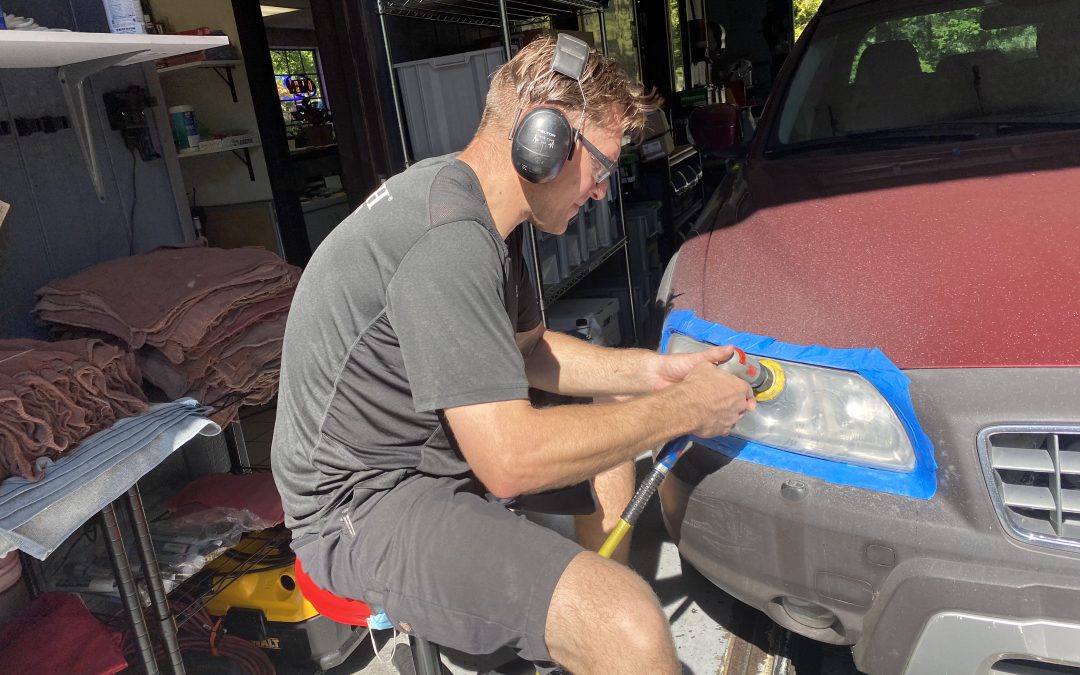
With a mild auto body cleaner and a damp buffing pad, you can tackle common DIY car maintenance tasks by buffing out light scuffs and surface scratches gently in small circles until the defect melds in with the paint. For more serious sandpaper gouges, apply a skim coat of touch-up paint in thin layers, allowing each to dry before adding another. Then wet-sand and polish for perfect blending. Minor dings are a job for a DIY kit, and using pull tabs or suction guns can usually pop the panel back without repainting. Protect finished surfaces with a good wax or synthetic sealant to minimize road spray and UV degradation, ensuring ongoing maintenance for your vehicle. Re-apply protection seasonally for best results.
Basic Interior Care
Vacuuming floors and seats frequently is a common DIY car maintenance task that helps catch grit and skin oils that fast-track wear, especially underneath seats and in seams. Wiping your dashboards, panels, and trim with a dedicated cleaner chosen for the material is essential. Avoid all-purpose household cleaners, which can remove coatings. Conditioning leather seats with a suggested leather conditioner, applied sparingly, prevents cracking and extends seat life. By maintaining your cabin through regular sanitizing of high-touch surfaces, you can minimize abrasive wear and extend the time between professional auto repair services.
Brake Pad Inspection
Take off the wheels and look at the brake pads for residual thickness and apparent wear, using your service manual specs as a guide. Hearing squealing or grinding when you drive is the sound of your pads wearing down or touching the rotors and needs immediate attention to keep from damaging the rotors. Look for irregular wear, this can indicate seized calipers or a warped rotor and might require a mechanic’s attention. Frequent checks and basic maintenance can save you from expensive rotor replacement and keep you safe, making it a common DIY car maintenance task that every car owner should prioritize.
When To Stop And Call A Professional
Today’s vehicles combine mechanical components with advanced electronics, making basic maintenance a common DIY car maintenance task. Knowing when to stop and call a professional auto repair service helps prevent small faults from escalating into costly catastrophes, especially when dealing with safety systems or complex issues.
Complex Warning Lights
Be quick to respond to the check engine light, ABS, or airbag warnings with professional diagnostics, as these lamps typically indicate faults in multiple systems that require a scan tool capable of reading live data and stored fault codes. Addressing the underlying problem is essential, as simply resetting warning lights can mask issues and lead to future diagnostic headaches. New cars depend on sensors, actuators, and control modules, and using professional diagnostic tools can provide waveform traces, freeze-frame data, and parameter values that generic DIY car maintenance tools cannot. Record when lights illuminated, driving conditions, recent repairs, and any symptoms like stalling or lack of power to pass along to the repair shop.
Transmission Issues
Hard shifting, slipping, delayed engagement, or weird noises under load indicate transmission issues that necessitate a shop visit. For proper maintenance, transmission internals and valve bodies require calibrated tools, clean environments, and the right kind of fluid. Using the wrong fluid or torque spec can lead to catastrophic damage. While at-home fixes and fluid swaps are only advisable for seasoned pros with the right equipment, basic maintenance practices can help car owners identify issues early. Noting fluid leaks near the transmission oil pan or burnt-smelling fluid aids technicians in planning a quicker diagnosis, ensuring the vehicle remains in optimal condition for road trips.
Steering And Suspension
Clunks, vibrations, and uneven tire wear can indicate steering or suspension problems that affect your ability to steer the vehicle effectively. Engaging in DIY car maintenance tasks like the replacement of shocks or struts requires caution, as proper spring compression, alignment, and torque sequence are crucial. If you notice trouble turning or wandering at speed, it’s wise to schedule a visit to a reputable auto repair shop for thorough inspections and necessary parts replacement.
Major Leaks
Big puddles of oil, coolant, or transmission fluid on the floor under your ride are dire signs for any car owner. If you notice a sudden leak, it’s crucial to pull over immediately. Use a drain pan to contain leaks until a professional arrives, otherwise, driving can lead to engine seizure or transmission failure. For major leaks, contact Autotech Blackhawk for professional assistance and the appropriate repair solution.
How DIY Affects Your Warranty
DIY car maintenance does not necessarily void your vehicle warranty, but it alters what you need to document and how to defend a later claim. The Magnuson‑Moss Warranty Act of 1975 protects car owners. Manufacturers cannot deny warranty coverage solely because you performed basic maintenance or used aftermarket parts. The key is causation, and they must prove your DIY work caused the failure they decline to cover.
Manufacturer Guidelines
To maintain warranty standing, follow your owner’s manual maintenance schedule and adhere to service intervals for essential tasks like oil changes and engine air filter swaps. If you’ve missed or changed an interval, it becomes more challenging to demonstrate proper care. Use approved engine oil grades and filters as specified by the manufacturer, as these are part of basic maintenance practices. Simple DIY car maintenance tasks, such as wiper replacement, should be done when recommended to prevent downstream damage that could be attributed to negligence. Be diligent in documenting each task with date, mileage, parts used, and notes on procedures, allowing a dealer to verify routine care rather than assume improper handling.
Keeping Records
- Date and odometer reading for each service
- Part brand, part number, and receipt
- Fluid type and quantity used
- Photographs of parts before and after installation
- Notes on tools used, torque values applied when applicable.
Keep receipts from auto parts stores and online orders as evidence of the right parts and fluids for your DIY car maintenance tasks. Note mileage, date, and a brief task description for each DIY car maintenance job. These entries establish a timeline that backs up routine maintenance and can be invaluable during warranty claims or dealer inspections.
Using Correct Parts
When performing diy car maintenance, it’s crucial to buy OEM or manufacturer-approved parts when the manual requests them. This is because matching part numbers reduces wiggle room in arguing. Spec it out, such as size, torque, thread pitch, and filtration ratings, before installing a new oil filter, brake pad, or bulb. Avoid inexpensive, poorly compatible aftermarket parts that can burn out prematurely and lead to bigger car repair issues. Always check packaging and instructions, and retain parts receipts to ensure proper servicing.
The True Value Of DIY Maintenance
DIY car maintenance offers obvious practical benefits and tangible trade-offs for today’s car owners, especially when considering basic maintenance tasks like checking wipers and washer fluid, which can save costs on professional auto repair services.
|
Task |
DIY cost/time (materials + tool amortized) |
Professional cost/time |
|
Oil & filter change |
$20-$40 saved per service, 30-60 min, tools $150-$300 upfront |
$60-$120, 30-90 min at shop |
|
Air filter replacement |
$18-$38 saved, 5-30 min |
$30-70, 15-45 min |
|
Brake pads (per axle) |
$80-$150 saved, 60-120 min |
$200-400, 60-120 min |
|
Cabin filter |
Minimal cost, 5-90 min depending on model |
$30-100, 20-60 min |
|
Complex jobs (timing belt, transmission) |
High risk, possible catastrophic cost if wrong |
$500+, specialist time and diagnostics |
Cost Savings
It is the most obvious financial victory, cutting labor charges. Managing DIY car maintenance tasks like oil changes, filter swaps, and tire checks on your own eliminates hourly shop fees and generates around $20 to $40 per oil service and $18 to $38 per air filter swap. Brake pad DIY can save $80 to $150 per axle. Those savings add up over routine visits and can be redirected toward upgrades or the occasional professional auto repair service. Upfront tool expenses, usually $150 to $300 for a rudimentary home kit, have to be amortized over uses. Incorrect work carries real costs. Wrong oil specs can damage engines, brake errors can cause failure, and incorrect transmission fluid can destroy a gearbox. Balance savings with risk tolerance.
Time Investment
A lot of things fall into mini-slots, especially when considering common DIY car maintenance tasks like fluid checks and wiper changes, which usually require less than an hour. Cabin air filter swaps vary significantly by model, from five minutes to an hour and a half, so make sure you plan accordingly. Planning around evenings or weekends bypasses shop wait times and streamlines prep for excursions. Time invested in learning and doing these basic maintenance tasks minimizes future diagnostic delays, although some newer vehicles do need computer resets or diagnostic tools for routine tasks, potentially adding time and complexity.
Vehicle Knowledge
Direct experience with DIY car maintenance projects generates valuable practical system insight. Knowing engine and brake fundamentals aids in detecting leaks, wear, and inefficiency ahead of time, avoiding expensive breakdowns. Familiarity, it turns out, breeds confidence for roadside fixes and better conversations with mechanics. Keep in mind that cars built after 2015 were more likely to need software resets and advanced diagnostics, which makes some services less DIY-friendly.
Conclusion
DIY car care puts money in your pocket and keeps your car safe. Small jobs like oil checks, filter swaps, brake-pad changes, and tire care suit most home setups. Begin with obvious steps, basic tools, and plenty of light. Keep track of what you do with dates and mileage. Grow skills with practice: change a cabin filter, bleed a brake line, or swap a wheel bearing in stages. Pause and call in a professional for fuel system work, complicated electronics, and major engine or transmission repairs. Be aware of your warranty stipulations and retain your receipts. Hands-on care increases your confidence and reduces shop visits. Attempt one new task this month, consult a reliable guide, and exchange results among friends. Need a starter checklist for your car model? I can create one.
Frequently Asked Questions
1. What Basic Car Maintenance Can I Safely Do At Home?
Can you safely do DIY car maintenance at home? Check and top up fluids, including engine oil, coolant, and windshield washer fluid. Replace wipers, change air filters, inspect tire pressure and tread, and replace light bulbs. These basic maintenance tasks require minimal tools and rudimentary safety precautions.
2. How Often Should I Change My Engine Oil?
Follow your owner’s manual for effective diy car maintenance. Most newer cars require an oil change every 8,000 to 16,000 kilometers or 6 to 12 months, so check the oil level monthly.
3. Can I Change My Tires At Home?
Yes, provided you have a proper jack, jack stands, lug wrench, and a safe, level surface, basic maintenance tasks like winter tire swaps or emergency flat fixes are common DIY car maintenance tasks that prove convenient.
4. When Should I Avoid DIY And Call A Professional?
Call a shop for brake system work, major electrical issues, transmission repairs, engine diagnostics, and sophisticated safety systems. If something requires specialized tools or diagnostic equipment, leave it to the pros.
5. Will DIY Maintenance Void My Vehicle Warranty?
No. Under most laws, if you perform basic maintenance tasks at home, such as oil changes and checking the engine air filter, it doesn’t void the warranty as long as you observe manufacturer service schedules.
6. How Do I Keep My DIY Work Safe And Reliable?
Whatever you do, use the owner’s manual, good parts, and proper tools for basic maintenance, including checking the engine air filter and windshield wipers. Work on level ground, use jack stands with a lifted vehicle, and adhere to torque specs and fluid capacities precisely.
7. How Much Can I Save By Doing My Own Maintenance?
While the savings differ, common DIY car maintenance tasks like oil changes and windshield wiper replacements can significantly reduce the cost of routine services by 30 to 70 percent, especially for savvy car owners.
Looking for a Mechanic You Can Count On?
When something feels off with your vehicle, you want more than a quick fix. You want a mechanic who listens, explains what’s happening, and helps you make the right decision without pressure or unnecessary repairs.
That’s what you can expect from autoTECH Blackhawk. Our team takes the time to understand your concerns, carefully inspect your vehicle, and clearly explain your options before any work begins. Whether you need routine maintenance, help diagnosing a strange noise, or a major repair, we’ll give you honest recommendations based on what your vehicle actually needs.
Choosing the right mechanic also means choosing someone who stands behind their work. autoTECH Blackhawk uses high-quality, manufacturer-recommended parts and offers an industry-leading 3-year/36,000-mile warranty, so you can feel confident long after you leave the shop.
Your vehicle plays an important role in your daily life. Trust it to a team that treats you with respect and your car with care. Contact the friendly team at autoTECH Blackhawk today to schedule your next service appointment and experience a better way to care for your vehicle.