

Where does DIY car repair actually make sense? DIY car repair makes sense when the job is appropriate for your abilities, tools, available time, and safety boundaries. Oil changes, air filter swaps, brake pad replacement, and battery swaps are all simple maintenance tasks that typically save you money and teach useful skills. Repairs requiring special tools, complex diagnostics, structural work, or safety certification should be handled by professionals. Factor in part cost, diagnostic time, warranty effect, and local labor rates in euros or dollars to benchmark savings. Evaluating your mechanical comfort level and access to service resources minimizes errors. The remainder of this post decomposes popular tasks, component costs, and tool inventories, along with decision heuristics to help you decide smartly.
Key Takeaways
- Use the DIY litmus test to align the job with your skills, tools, time, and risk tolerance before you dive into any repair to prevent unsafe or expensive blunders.
- Focus on low-complexity stuff such as fluid checks, filter swaps, simple replacements, and basic electrical work that only need rudimentary tools and yield obvious cost and skill advantages.
- Stay away from red-flag jobs such as transmission, advanced electronics, structural, or critical safety system repairs because they require specialized diagnostics, calibration, or tools and have high safety and resale risks.
- Hidden costs: If you’re comparing DIY savings to professional service, remember to factor in tool purchases, potential correction expenses, and potential resale value loss.
- Customize your DIY approach to your car’s personality, its age, brand, and model, because older cars are generally easier while new ones require dealer tools or might void the warranty.
- Trust the proper resources: vehicle-specific repair manuals, high-quality tutorial videos, and a community of enthusiasts. When you’re uncertain, default to a simple decision rule: get a pro.
The DIY Litmus Test
There’s a DIY litmus test for determining if a car repair is manageable. It evaluates skill, basic tools, time, risk, and cost to produce a neat positive or negative output. Think of the test as a checklist, not a rubric. Results depend on mechanical aptitude, research, and the patience required for DIY car maintenance.
1. The Complexity
Determine if the work is grunt maintenance or a system repair. Easy gigs, such as an oil change, air filter, or brake pad swap, fit nicely with beginner ability and obvious web tutorials. Electrical faults, advanced diagnostics, and calibration work need vehicle-specific knowledge. A code checker finds fault codes, but is not a diagnostic tool. Some of the more complex repairs require things like ECU calibration, timing chain alignment, or airbag handling. These are dangerous for the untrained.
Some common repair categories:
- Easy: fluids, bulbs, wiper replacement.
- Moderate: brake rotors, brake lines, suspension bushings.
- Hard: engine rebuild, transmission work, advanced electrical systems. Don’t fall for the DIY Litmus Test. Just because a forum thread makes something appear easy, don’t take it for granted. Compare the job steps to your own experience and the repair manual.
2. The Tools
Enumerate your tools before you begin. Simple tasks require wrenches, socket sets, a jack and jack stands, and pliers and screwdrivers. Medium or tough tasks bring torque wrenches, specialty sockets, engine hoists, scan tools, or calibration equipment. You might have to order parts or a starter kit for your particular make and model.
As always, keep a repair manual or trusted online guide on hand for your vehicle. Employ factory torque specs and procedures. Safety gear, including gloves, eye protection, and a powerful work light, mitigates hazards and averts typical wounds.
3. The Time
When considering diy car maintenance, figure in overall time with prep, parts delivery, and debugging. For beginners, you’ll probably want a multiple of the published time, somewhere between two and four times as much. Weigh cash saved against hours spent, if a complex repair has you mired over your weekend, the pros might be less expensive. Don’t skimp on uninterrupted time and anticipate setbacks in learning.
4. The Risk
Identify hazards when performing DIY car maintenance: working under a car without rated stands, hot systems, or live electrical circuits can lead to costly mistakes. Errors can void warranties or result in expensive car repairs. For any issue that could harm people or damage costly parts, seeking professional help is crucial.
5. The Cost
When considering DIY car maintenance, count components, equipment, instructions, and potential repair fees. Comparing to shop quotes and warranty can help you gauge costs. A DIY litmus test can save money on drudge work, but it may get pricey if you need specialized equipment or have to repaint OEM components. Pros include learning and control, while cons involve time and higher risks of hidden costs.
Beginner-Friendly DIY Car Repairs
Beginner-friendly DIY car repairs are generally low-risk tasks that require basic tools and offer clear opportunities to save money and develop practical skills. These projects avoid safety-critical systems, such as brakes, steering, airbags, and advanced electrical components. Common examples include checking fluids, replacing filters, installing wiper blades, and changing certain bulbs.
The amount saved depends on the vehicle, replacement parts, and local labor rates. Performing routine maintenance yourself can also help you identify leaks, worn components, and other warning signs before they develop into more expensive problems. Always consult your owner’s manual and use new or manufacturer-approved parts when reliability and safety are important.
Fluid Checks
Checking engine oil and coolant levels is a relatively simple way to identify potential problems before they become serious. You can also visually inspect the brake-fluid reservoir, but opening, draining, or servicing the braking system should be left to a qualified professional unless you have the appropriate training.
Consult your vehicle’s owner’s manual to confirm the correct fluid specifications and reservoir locations. Using the wrong oil, coolant, or other fluid can damage important components. Park the vehicle on a flat surface, allow the engine to cool, and wear gloves and eye protection.
Watch for dark or gritty oil, unusually low fluid levels, discolored coolant, or visible contamination. These conditions may indicate that maintenance or a professional inspection is needed. If fluid levels repeatedly drop after being topped off, contact The Autotech Blackhawk to have the vehicle checked for leaks or underlying mechanical problems.
Filter Swaps
Replacing engine air filters and cabin air filters is a straightforward maintenance task that can support engine efficiency and cabin-air quality. These filters are often accessible with basic hand tools, although their locations and replacement procedures vary by vehicle.
Consult the owner’s manual or a vehicle-specific repair guide before beginning. Order filters that match your vehicle’s year, make, model, and engine configuration. Installing the correct, high-quality filter helps ensure a proper fit and dependable performance.
Oil-filter replacement is normally performed during an oil change. Although many experienced vehicle owners handle this task at home, it requires proper lifting equipment, the correct oil and filter, accurate tightening procedures, and responsible disposal of used oil.
Basic Replacements
Wiper blades, certain exterior bulbs, and some manually adjusted side mirrors may be manageable DIY repairs. These replacements can improve visibility, safety, and everyday driving comfort without requiring advanced mechanical knowledge.
Match replacement parts using the vehicle identification number, year, make, model, bulb number, or paint code when applicable. Basic tools, such as screwdrivers, sockets, and pliers, may be sufficient, but some modern vehicles require the removal of trim panels or other components.
Review vehicle-specific instructions before replacing a headlight bulb, horn, or mirror. If the repair involves complex wiring, sealed lighting assemblies, cameras, sensors, or driver-assistance calibration, schedule professional service.
Basic Electrical Repairs
Replacing accessible fuses and certain plug-in relays may be relatively simple when you follow the manufacturer’s instructions. Use the owner’s manual to locate the correct fuse box and confirm the required fuse type and amperage. Never install a fuse with a higher amperage rating than the manufacturer specifies.
Turn off the vehicle before beginning and use a flashlight and fuse puller when needed. A blown fuse can be a symptom of a larger electrical problem. If a replacement fuse immediately blows again, do not continue replacing it. Have a qualified technician diagnose the underlying fault.
Avoid working on advanced wiring, control modules, airbags, high-voltage hybrid components, and driver-assistance systems without specialized knowledge and equipment. When a task exceeds your experience or involves a safety-critical component, The Autotech Blackhawk can provide professional diagnosis and repair.
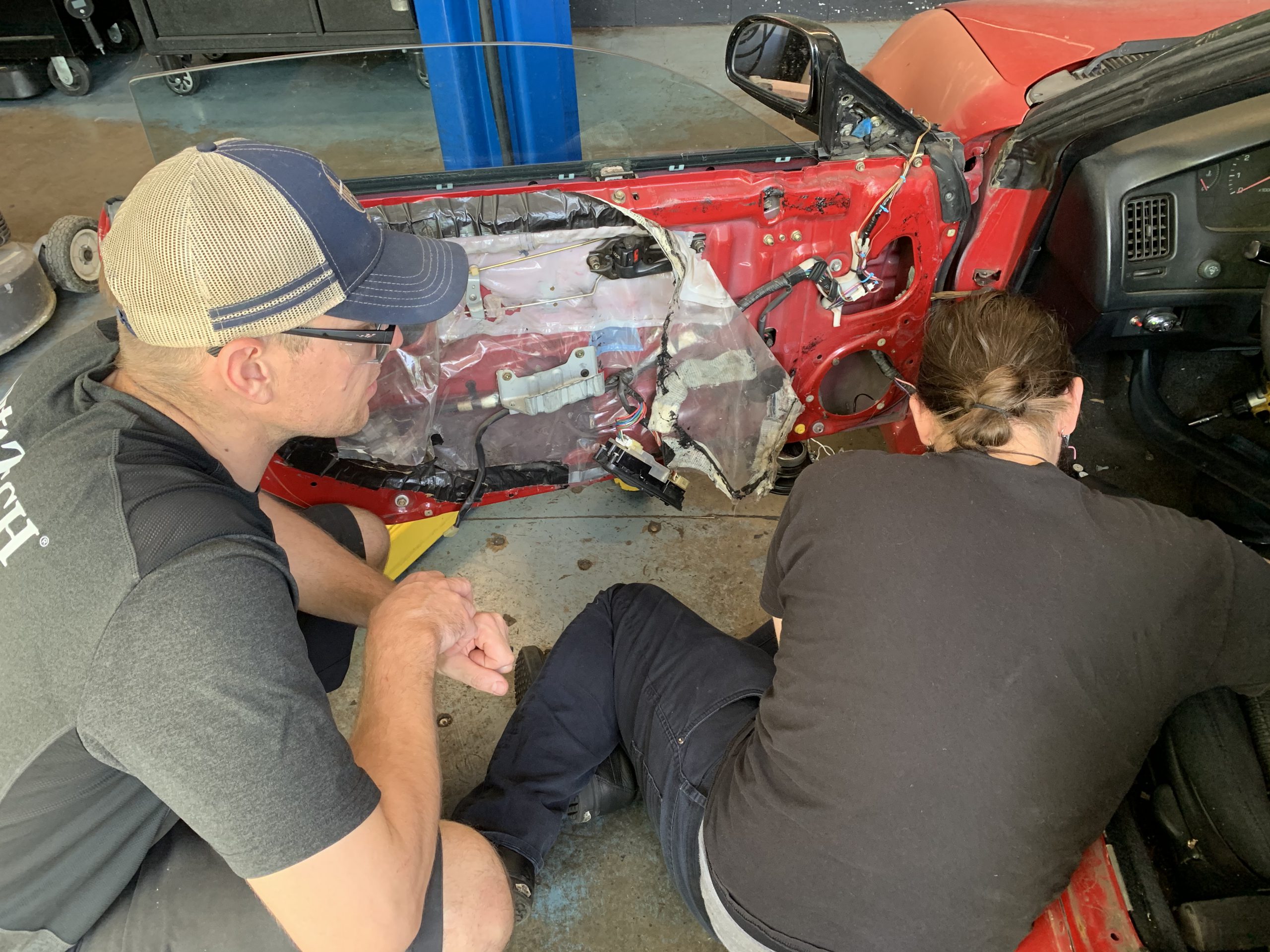
Red-Flag Professional Jobs
Fixes that stretch beyond the usual car maintenance can involve complex repairs and overlooked procedures, with failure modes that aren’t visible until they’re too late. Red-Flag Professional Jobs require advanced diagnostics and specialized equipment, which not only reduce safety risks but also prevent costly, cascading failures. The checklist below points out repairs that go beyond normal DIY boundaries and why professional auto repair services are the safer choice.
Transmission Systems
Transmission work involves complex repairs due to its complicated mechanical and hydraulic systems that require a niche skill set. Improper disassembly, missed calibration procedures, or using incorrect fluids can lead to costly mistakes, including complete transmission failure and loss of reliable transportation. Modern transmissions often need specialized equipment for lift access, torque-controlled fasteners, and pressure testing rigs, which are not typically found in a home garage. Additionally, most vehicles require software recalibration after component replacement. Therefore, it’s vital to seek professional help for any shifting issues, power loss, or transmission fluid leaks to avoid dangerous mistakes.
Advanced Electronics
Modern cars incorporate networks of modules, sensors, and actuators requiring expert diagnostics. While DIY car maintenance efforts can be appealing, they often run the risk of frying control units or inadvertently shutting off safety subsystems. Tasks like ECU work or ABS repairs typically require professional help, specialized equipment, and proper knowledge. Professionals adhere to repair manuals and regimented routines, isolating circuits and backfeeds that amateurs often overlook, ensuring that vehicle repairs are done safely and effectively.
Structural Integrity
Fixes to frames, main panels, or large body areas are essential for managing car repairs and modifying crash performance and alignment. Shoddy welding, bad panel fitment, or paint-and-seam work can reduce safety and resale value. Bumper and radar-aligned sensors need exact placement, as even a slightly off mount can misread adaptive cruise or collision systems. Professionals use specialized equipment and OEM parts, including paint-matching, to restore strength and aesthetics. For extensive damage requiring welding or big panel replacement, visit a certified body shop.
Protective Systems
Brakes, steering, and airbags are safety-critical components in vehicle maintenance. Incorrect torque specs, wrong bolts, or under-torqued calipers can lead to dangerous mistakes. After complex repairs, calibration, pressure tests, and diagnostic verification are essential to ensure safety. Technicians use checklists and formatted part trays to avoid costly mistakes, emphasizing the importance of professional expertise in safety-critical repairs.
The Hidden Costs
DIY car maintenance may seem less expensive initially, but it often involves complex repairs that can lead to costly mistakes if not approached with the right knowledge. Weighing the pros and cons of handling vehicle repairs yourself versus seeking professional help is essential.
Specialized Tools
Many repairs require tools outside of a basic starter kit. Puller sets, spec-calibrated torque wrenches, diagnostic scanners, engine hoists, specialty sockets, they all add up fast. Some pieces run into the hundreds of euros, while other tasks require a dedicated workstation with lifts or stands.
Purchasing tools just to employ them one time frequently trumps labor savings. Using jerry-rigged driver bits and off-the-shelf substitutes increases the potential for ill fit, stripped threads, or burred components, all of which lead to rework. Rent or borrow when possible, but only if you’re able to operate the equipment safely. Wrong application generates fresh hazards, and you’re on the hook.
Correction Costs
One error can spiral into a huge charge, especially when it comes to car repairs. Bolts that are left untorqued can lead to leaks, over-tightened studs can snap, and air bubbles can form in brake lines. For drivers attempting DIY car maintenance, it’s crucial to understand that seals that don’t seat properly can fail, resulting in costly mistakes. Repairing a stripped thread or swapping out a torn timing part after an ill-conceived DIY repair can easily cost multiple times the initial service estimate.
Misdiagnosing a check engine light can be both easy and expensive. Many drivers mock-replace parts and shell out hundreds before discovering the actual issue, which is often a simple sensor or software reboot. When considering DIY for complicated tasks, don’t forget to factor in the cost of professional help, as accurate diagnosis tools and processes are essential for successful vehicle maintenance.
Resale Value
Shoddy repairs can affect resale price and curb appeal. Visible paint mismatch, shoddy bodywork, non-OEM parts, and unbalanced panel gaps chip away at buyer confidence. Instead, professional work that is recorded sends signals that you care and can justify a higher price.
Save all repair receipts and take photos. Documented pro service is even better because it shows you the right parts and methods. For major pieces, the suspicion of covert harm from amateur work will cut hundreds off resale value.
|
Hidden cost category |
Typical items |
Example impact (EUR) |
|
Tools & workspace |
Torque wrench, scanner, lift rental |
100-1000+ |
|
Correction & rework |
Replaced parts, labor, towing |
200-2000+ |
|
Time & inconvenience |
Hours/days of work, lost mobility |
Hard to quantify |
|
Value depreciation |
Buyer distrust, non‑OEM parts |
100-1000+ |
Your Car’s Personality
Your car’s personality is a pragmatic filter for determining whether a DIY car maintenance repair is reasonable. It is expressed by performance and handling, and even by sounds and smells and history of maintenance. Age, make, and model form that personality and inform you what tools, parts, and specific expertise you’ll require. Here are core dimensions to peruse prior to grabbing your basic tools.
- Age and model complexity
- Availability of parts and manuals
- Electronic and safety system integration
- Known brand quirks and special tools
- Evidence of rust, prior repairs, or neglected maintenance
- VIN, paint code, and part number requirements
- Ownership and service history patterns
Older Models
Older cars typically have less complex mechanical and electrical components that are more accessible and straightforward to troubleshoot. For many popular models from the 80s to 2000s, repair manuals, community forums, and used parts abound, which reduces expense and the learning curve.
Rust and prior fixes change the equation. A seized bolt or a patched subframe can turn a routine job into a full-day salvage. Vintage cars can be sprightly or torpid by tune and age. That horsepower personality directs what labor you seek. Enthusiasts acquire hands-on skills quickly when working on older cars, and these projects impart hardy mechanical reasoning.
Newer Models
The new vehicles have all these integrated control modules, and driver aids and wiring that are really complex and touch safety as well as emissions. Diagnostics usually require dealer-level software, secure access, and calibration tools to reset sensors or reflash modules.
Careless repair with the wrong hardware can leave systems uncalibrated or even induce fault modes that downgrade stability or active safety. Warranties get voided by unauthorized repairs, and newer cars’ personality, responsive, nervous, or stable, relies on software as much as hardware. Limit DIY on newer models to oil, filters, wipers, and basic brakes unless you have diagnostic access.
Brand Specifics
Some brands employ proprietary fasteners, unique components, or nonstandard procedures even on simple parts. Verify with OEM apps, factory manuals, and part cross-references before ordering. VIN, paint code, and exact part numbers are often requested.
Generic parts can fit, but they can change noise, feel, longevity, and a car’s personality. A replaced steering rack with the wrong spec will make handling jittery. Check parts fit, check tool requirements, and check supplier policies. That’s what saves you from stepping on your thumb and keeps the car’s soul intact.
The Right Resources
The right resources eliminate guesswork and keep car repairs safe and efficient. Begin with a good repair manual or trusted website that matches your car’s make, model, year, and engine code. A factory service manual provides step-by-step sequences, torque specs, wiring diagrams, and diagnostic flows that help prevent costly mistakes. If you don’t have a factory manual, find a good third-party manual from a recognized publisher. Before starting, compare your procedures and highlight any differences to ensure proper knowledge.
Supplement written steps by watching video tutorials from well-known sources. Select all the certified technicians, dealership service channels, or well-known independent shops with nice camera angles and tool lists. Stop and rewind at important stages such as hose removal, connector release, and torque sequence. Videos are particularly helpful for intricate jobs like water pump replacement, timing cover work, or routing wiring harnesses where hand positioning and clearances are crucial for successful diy car maintenance.
Subscribe to message boards and enthusiast communities for model-specific advice and troubleshooting. Use communities that screen posts or possess seasoned moderators. Thread-search for symptom-based solutions before posting. Community input can highlight model idiosyncrasies, typical vulnerabilities, part numbers, and useful replacements. Maintain logs of useful threads and bookmark wiring schematic posts, torque charts, and checklist templates for effective vehicle maintenance.
Build a skill-level tiered resource list. For beginners: a basic toolkit, torque wrench, multimeter, a water pump replacement guide, wiring schematics, and a torque specification chart. For intermediate DIYers: specialty pullers, press adapters, scan tool with live data, service manual, and parts tray solutions like egg cartons and Ziploc bags to label and store fasteners. For advanced work: engine hoist, shop press, calibrated torque tools, and access to a lift or sturdy stands. A fully equipped work area minimizes interruptions and lost components. Systematic component storage avoids incorrect reassembly.
Invest in a few specialized tools that pay off over time: a quality torque wrench, a diagnostic scanner, and service manuals. They’re time savers, damage reducers, and diagnosis enhancers. More than tools, develop a habit of capturing the repair process with photos and notes. This creates mechanical intuition and enhances future repairs.
Conclusion
DIY car repair makes sense for small, well-defined chores. Easy oil changes, brake pad swaps, and air filter fits can save you a bunch of money, but more importantly, teach you an incredibly useful skill. Complicated jobs like engine work, airbag systems, and wiring require pros. They minimize risk and preserve warranties. DIY car repair: when does it really make sense? Throw in parts, a repair manual, and a safety kit into your equation. Read forum threads and watch walk-through videos, and test it on a low-stakes part first. Match the car’s age and build to the work. Older vehicles with uncomplicated systems are ripe for hands-on work. Newer, high-tech cars push you toward a shop. Attempt one small project this month, track time and cost. Pass what you learn onto others.
Frequently Asked Questions
1. When Is DIY Car Repair A Good Idea?
DIY car maintenance makes sense for straightforward maintenance tasks like oil changes, air filter swaps, and battery changes. These manageable car repairs save money and build skills when drivers have the right tools and a trustworthy guide.
2. What Repairs Should I Never Attempt Myself?
Steer clear of complex repairs such as fuel system work, high-voltage electrics (hybrid/electric batteries), major engine internals, and steering or suspension overhauls, as these tasks are best left to professional mechanics.
3. How Much Can I Realistically Save By Doing Repairs Myself?
Save 30 to 60 percent on labor for straightforward maintenance tasks involving basic parts and labor jobs, but savings diminish for complex repairs that require specialized equipment and professional expertise.
4. How Do I Know If I Have The Right Tools And Skills?
Consult the repair manual and step-by-step guides for manageable car repairs. If a job requires specialized equipment or advanced diagnostics, it’s likely beyond basic DIY car maintenance. Start with straightforward maintenance tasks and develop your skills incrementally.
5. What Hidden Costs Should I Consider Before Starting A DIY Repair?
When considering DIY car maintenance, factor in tools, diagnostic equipment, and specialized parts alongside potential errors and voided warranty coverage to determine if manageable car repairs make sense.
6. Can DIY Repairs Void My Car Warranty?
Standard service usually won’t void warranties if properly performed and recorded, but major car repairs or work done incorrectly can. Save your receipts and stick to specs for reliable vehicle maintenance.
7. Where Can I Find Trusted Repair Information And Parts?
Use your car’s service manual and OEM parts from dealers, while also exploring trusted auto repair services and great forums online for reliable car maintenance, ensuring you avoid costly mistakes.
Looking for a Mechanic You Can Count On?
When something feels off with your vehicle, you want more than a quick fix. You want a mechanic who listens, explains what’s happening, and helps you make the right decision without pressure or unnecessary repairs.
That’s what you can expect from autoTECH Blackhawk. Our team takes the time to understand your concerns, carefully inspect your vehicle, and clearly explain your options before any work begins. Whether you need routine maintenance, help diagnosing a strange noise, or a major repair, we’ll give you honest recommendations based on what your vehicle actually needs.
Choosing the right mechanic also means choosing someone who stands behind their work. autoTECH Blackhawk uses high-quality, manufacturer-recommended parts and offers an industry-leading 3-year/36,000-mile warranty, so you can feel confident long after you leave the shop.
Your vehicle plays an important role in your daily life. Trust it to a team that treats you with respect and your car with care. Contact the friendly team at autoTECH Blackhawk today to schedule your next service appointment and experience a better way to care for your vehicle.